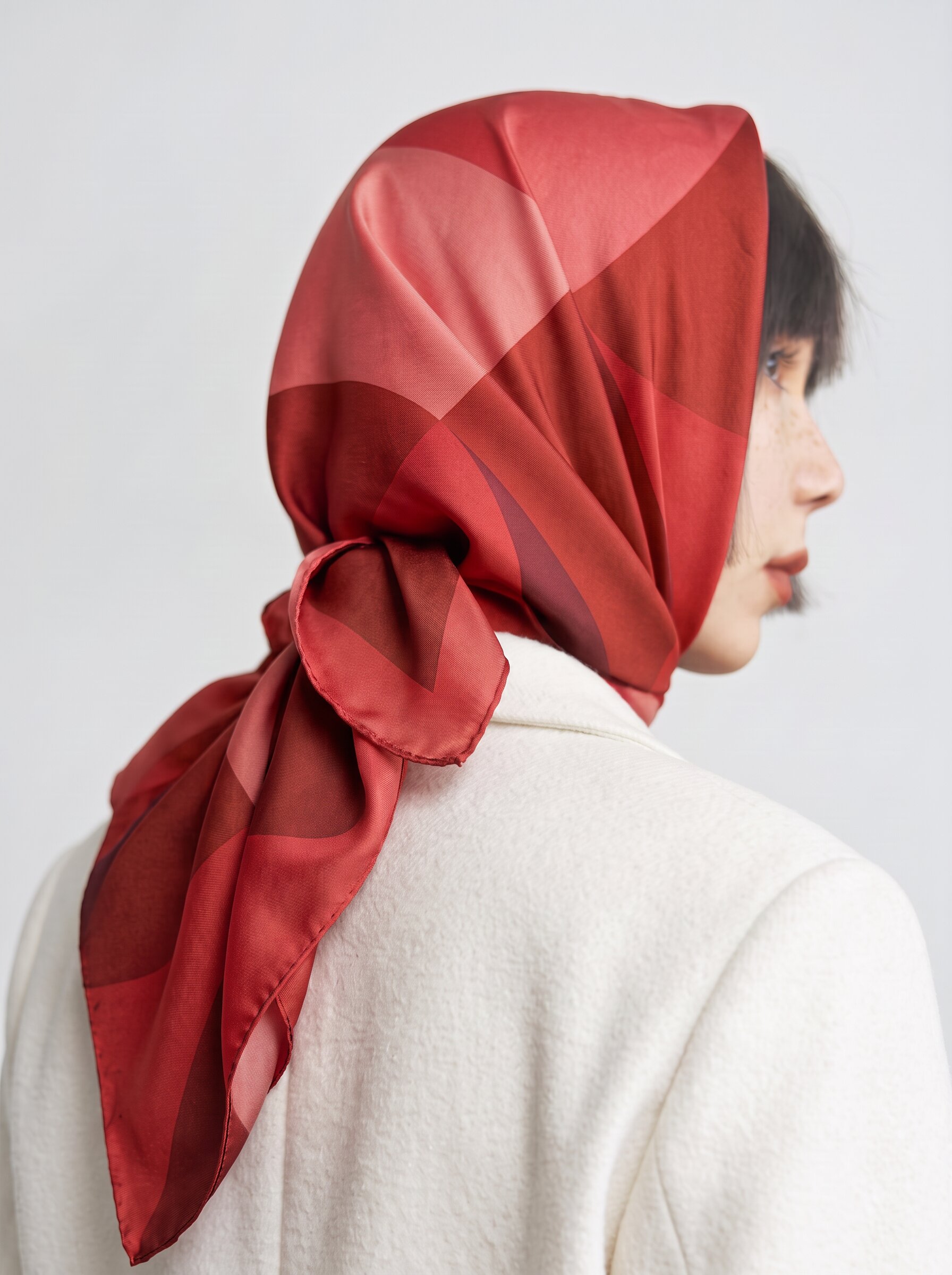
Functionalism “ERA”
LOVESILK • 2026
Louis Sullivan’s maxim “form follows function” says that an object should take its form from its purpose alone. A scarf has one purpose: it is folded and tied. So the wearer’s gesture becomes the author of the pattern. The print is a score for the movement of the silk, and its geometric grid locks together exactly where the fabric breaks in the fold.
The Brief
Souvenir scarves of two Brno functionalist landmarks, Kavárna ERA and Hotel Avion, designed a hundred years ago. The brief asked for a pattern inspired by the motifs of these buildings.
The Design
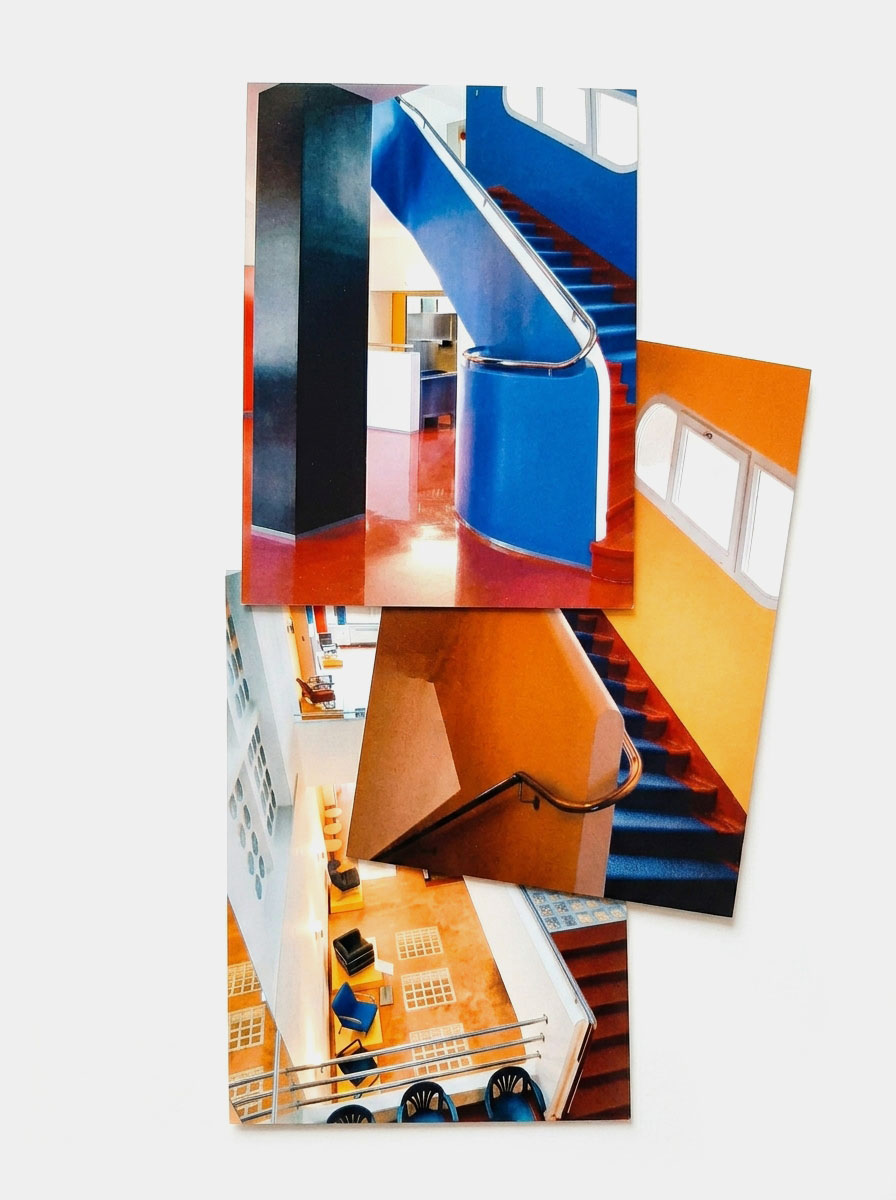
I didn’t want to put a building motif on a scarf, because it would not be attractive to wear, and the interiors of both buildings are very loud, with large flat areas of saturated red, blue and yellow.
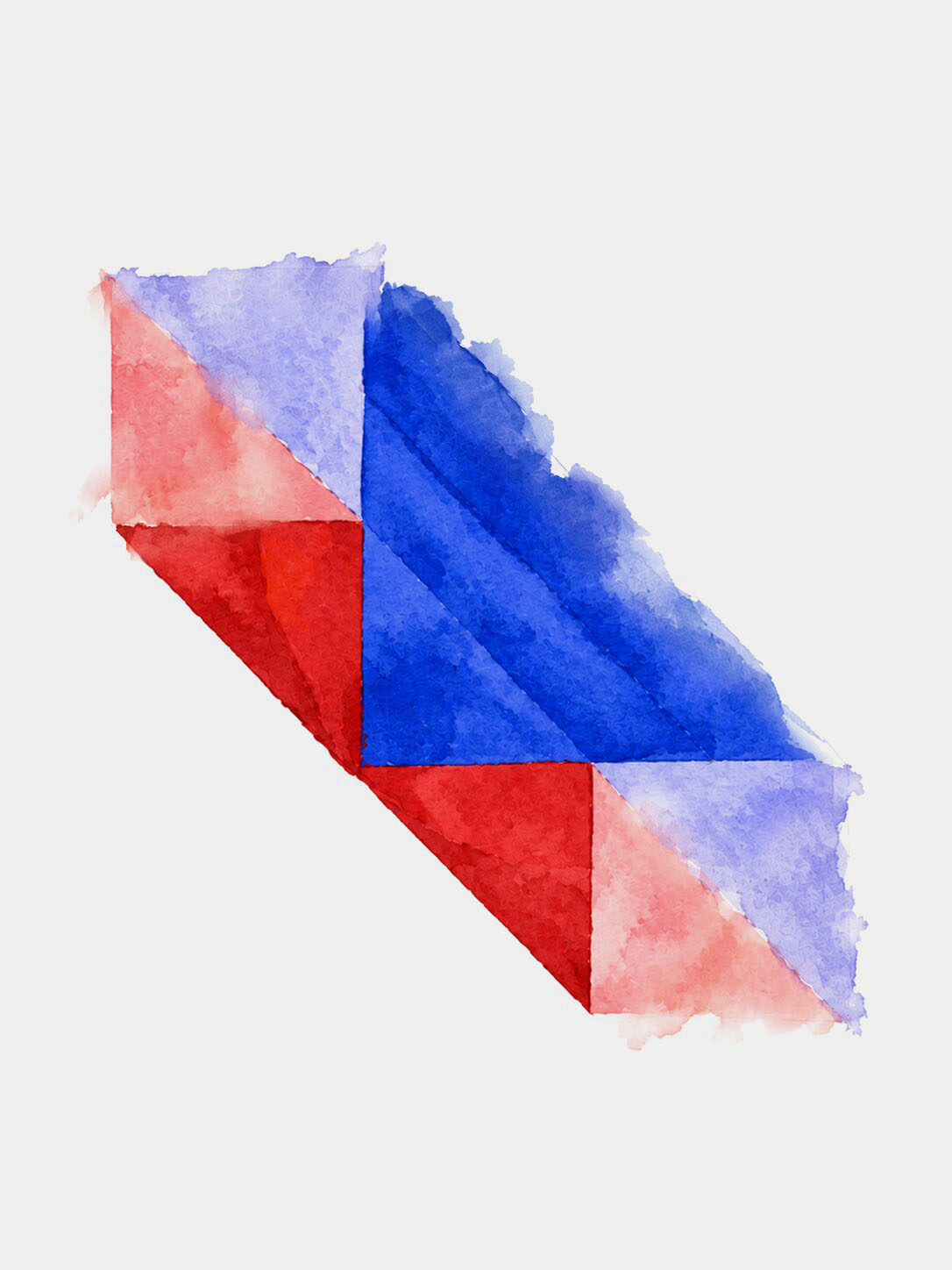
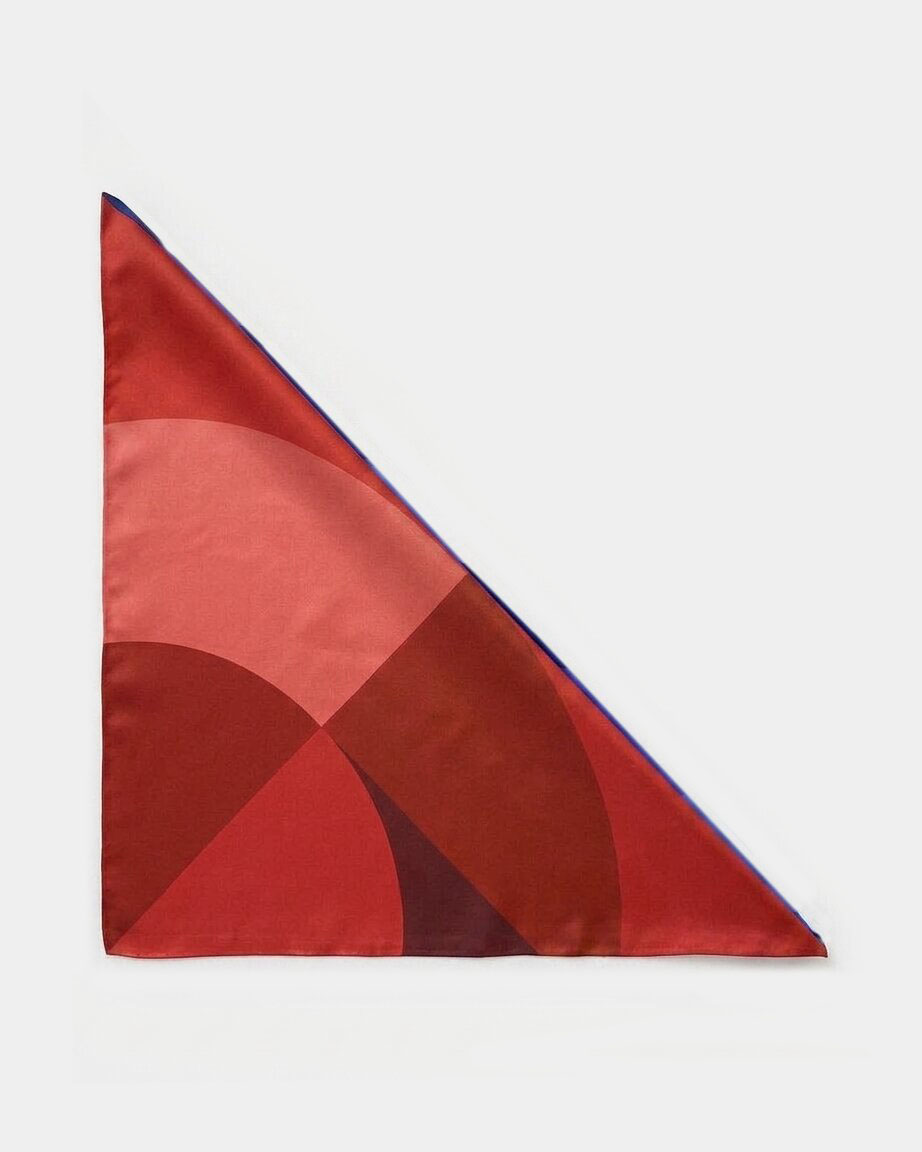
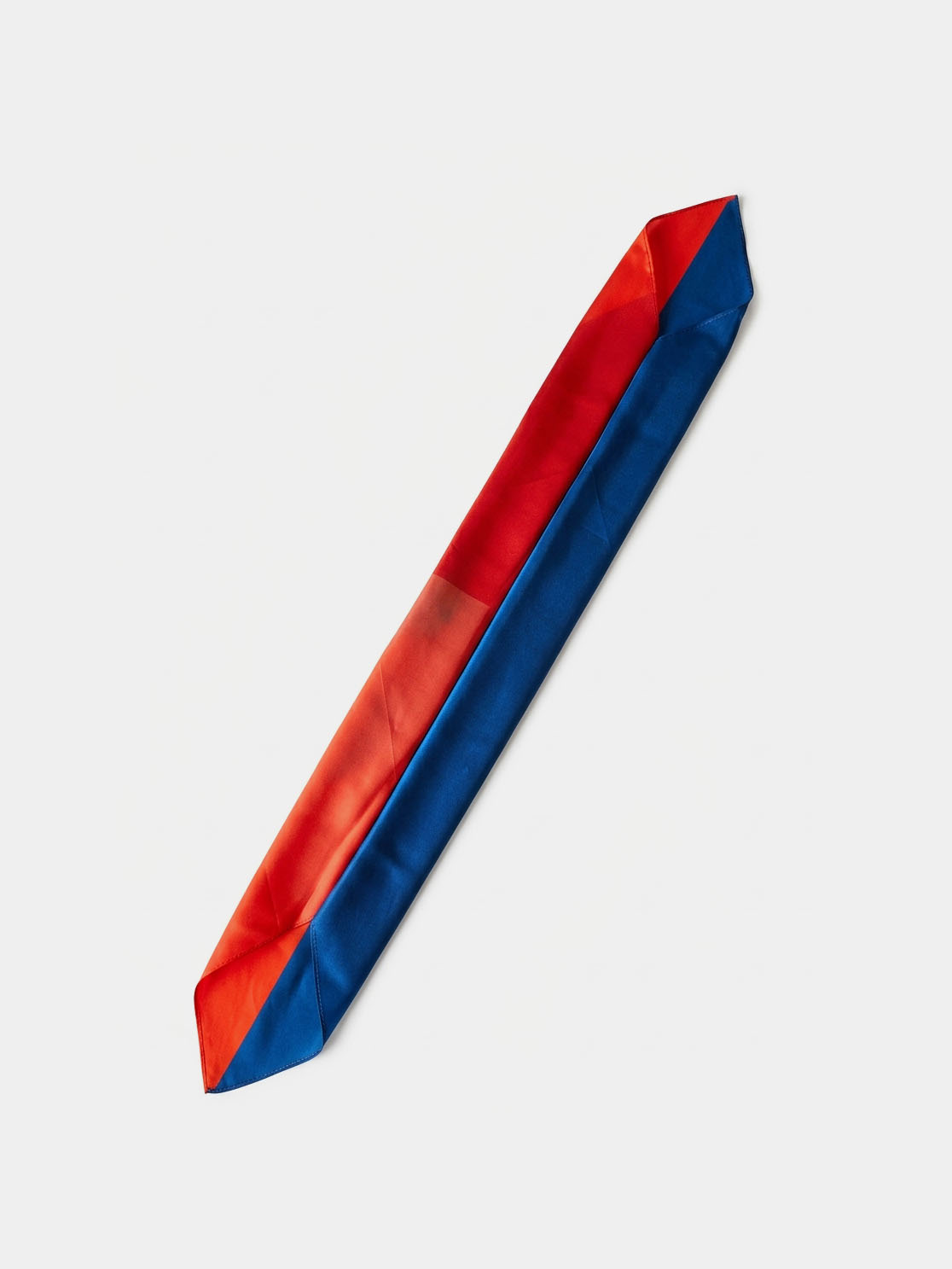
Instead I went after the meaning of the word “functionalism” and projected the pattern onto the fold: form follows use, and the use of a scarf is folding. The pattern is built on the pli de base, with planes of colour like the posters of the functionalist era. By folding, the scarf changes its color.
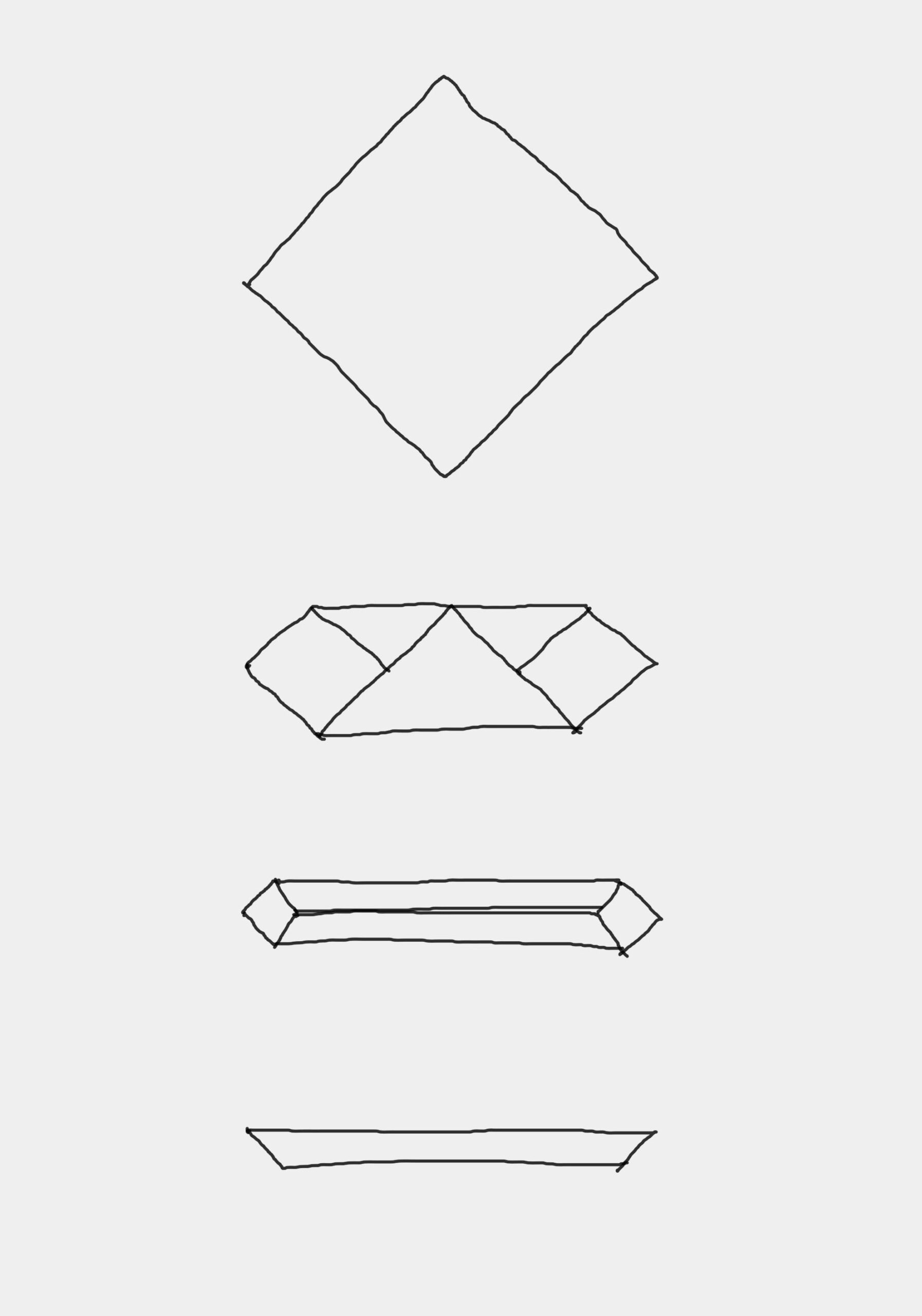
The pli de base is a classic technique for folding a silk scarf—six steps that gradually transform the square into a narrow band. Through diagonal folds, the shape shifts from a square to a triangle, and then into a slender strip. The pattern quietly guides the hands as they fold.
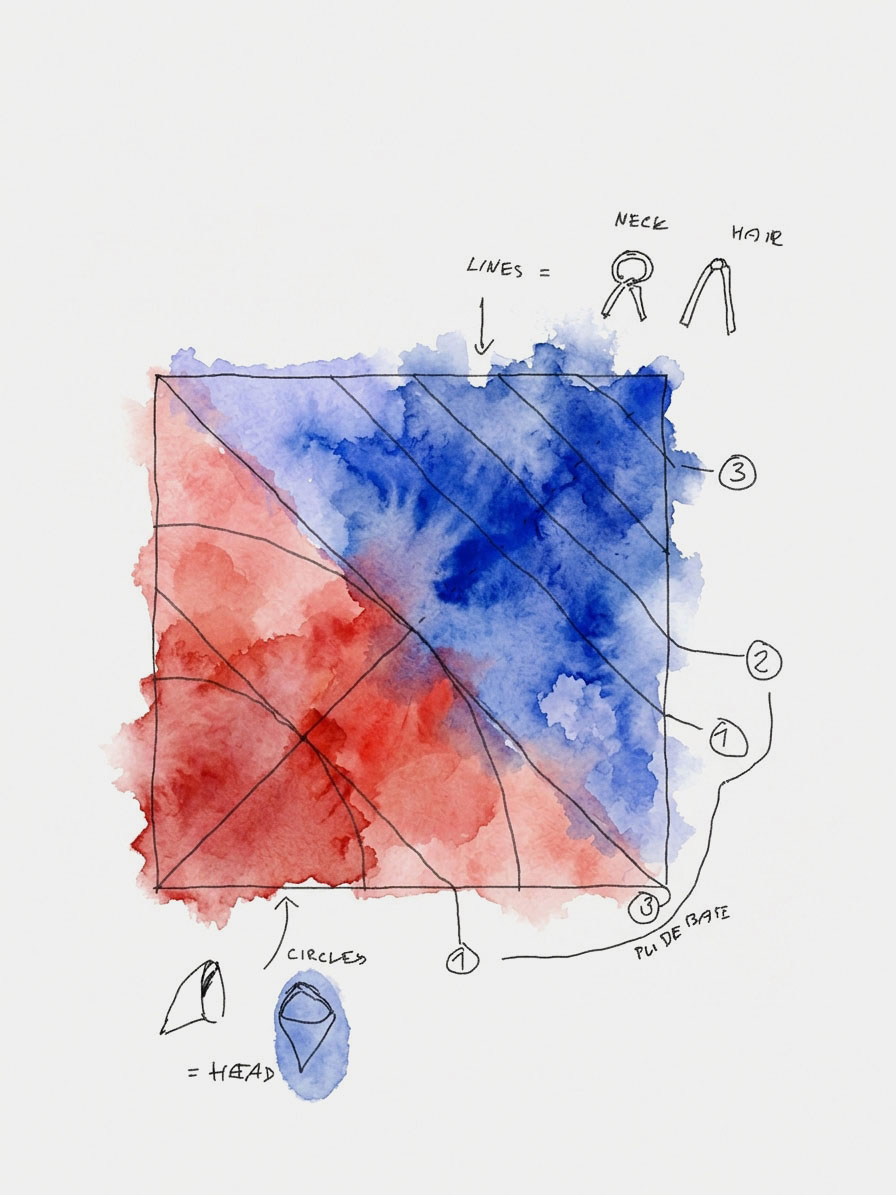
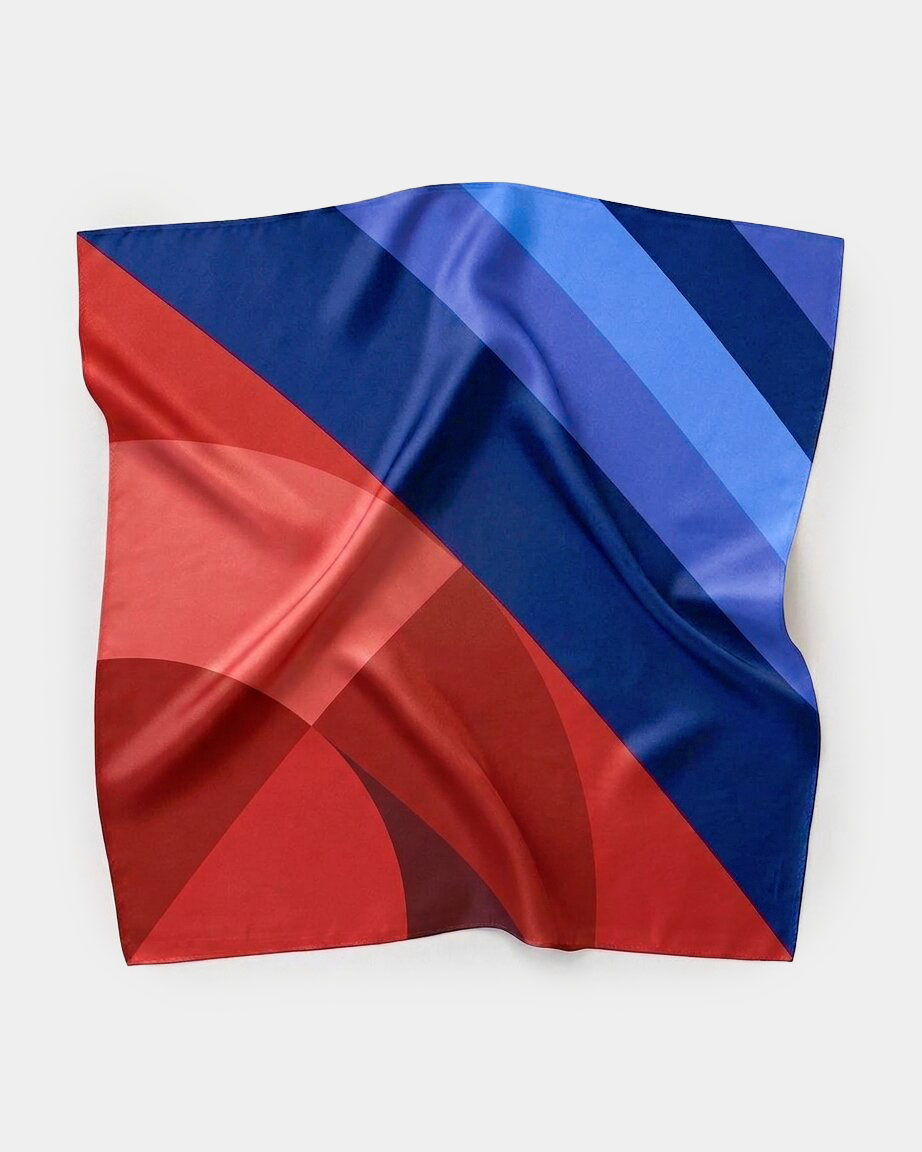
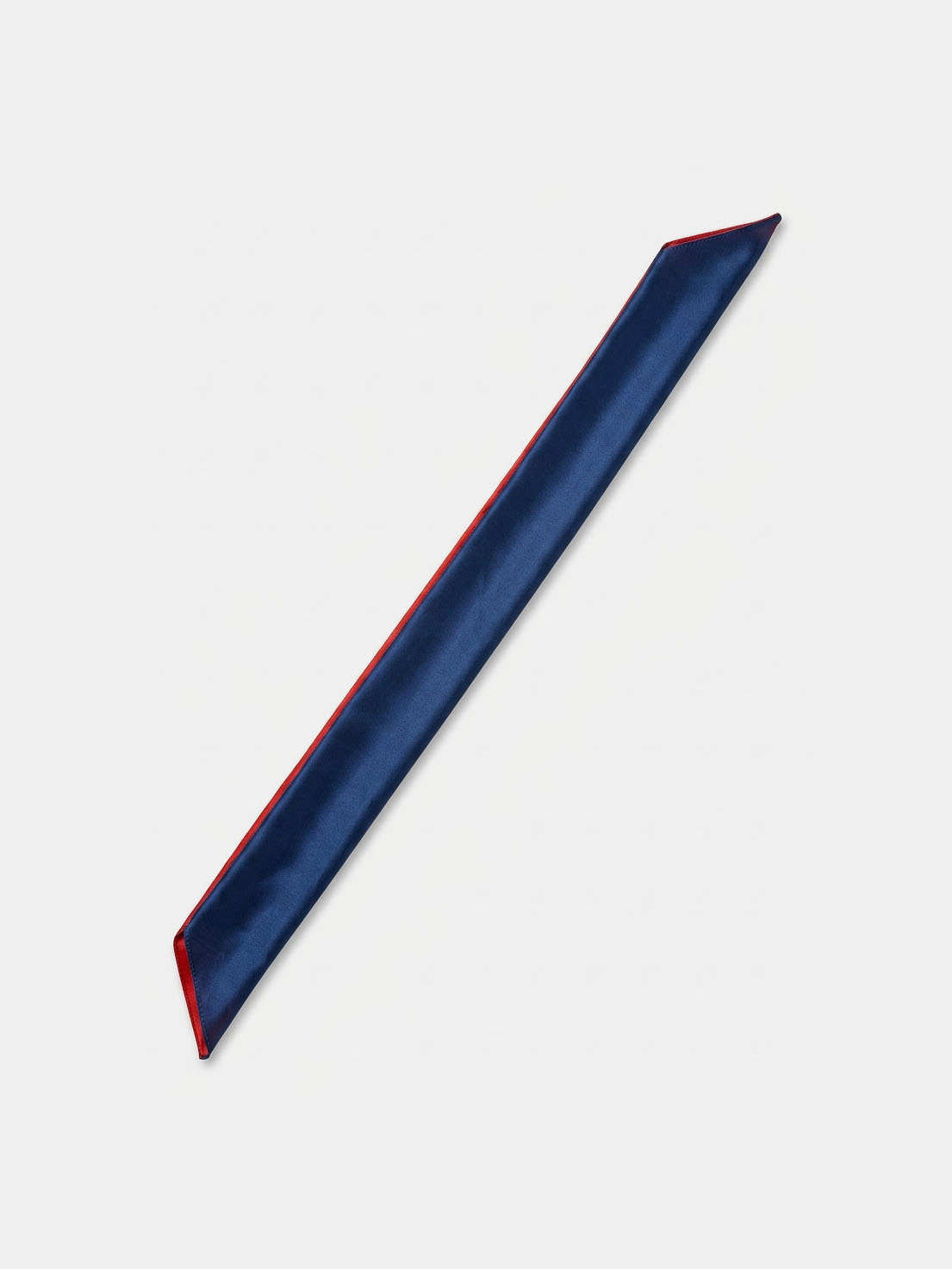
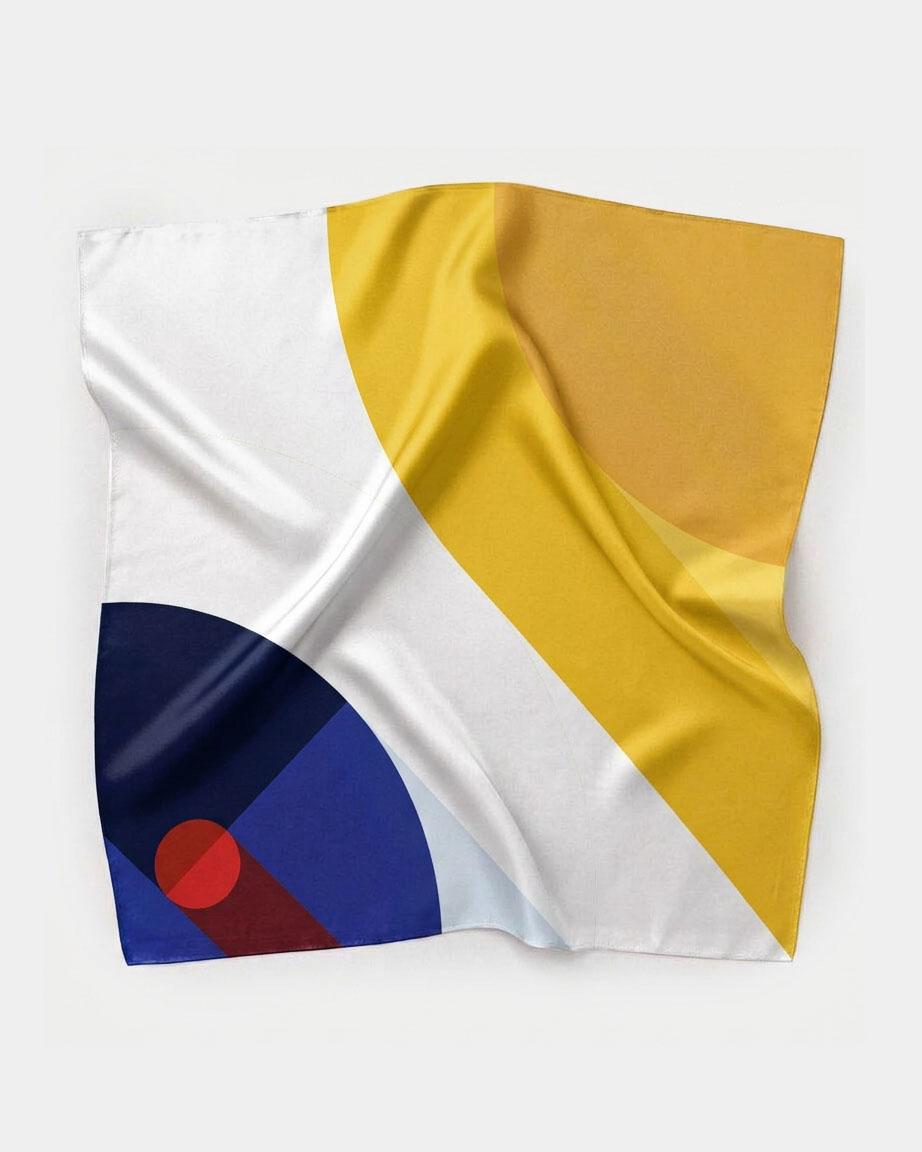
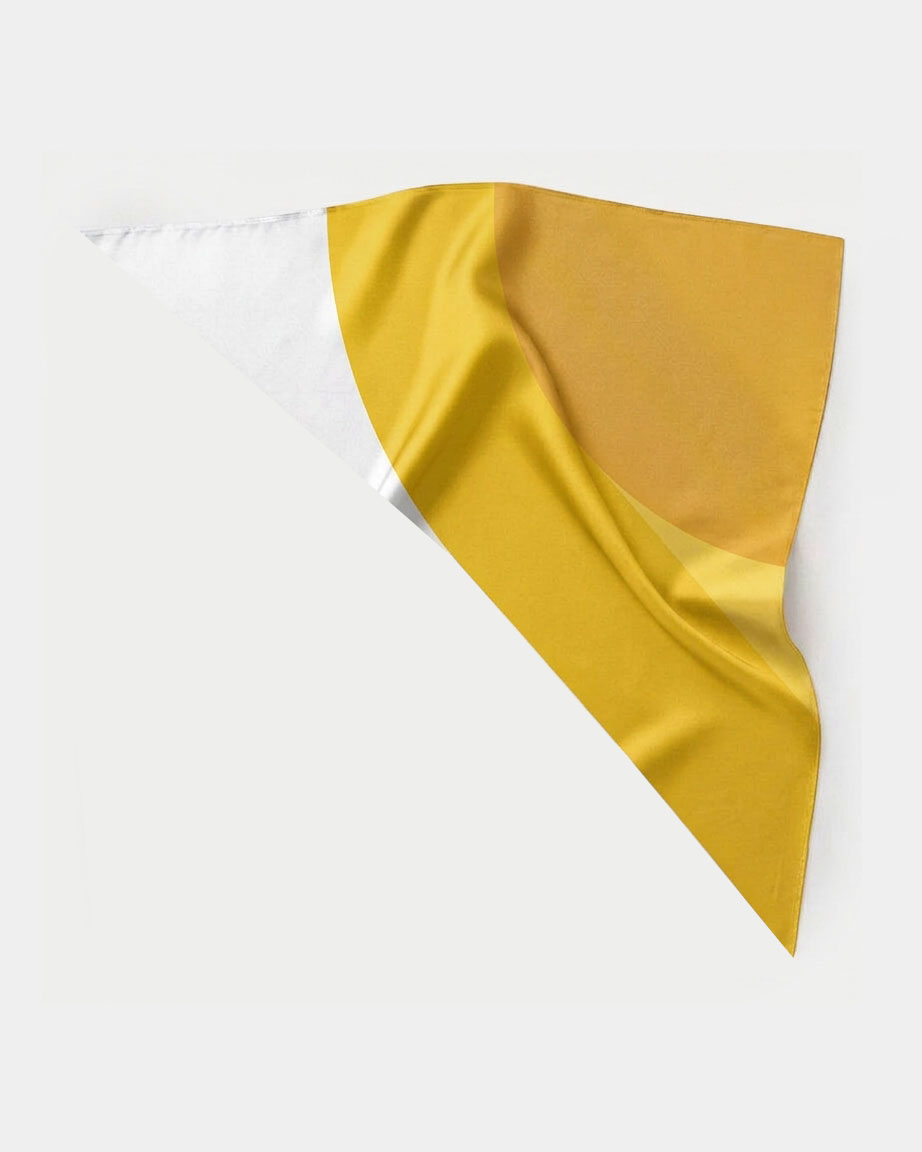
The colour comes from two functionalist buildings. Fuchs’s Hotel Avion is austere on the outside and red, blue and yellow within, down to the walls of its rooms; the three scarf designs work with that palette at different densities. Café ERA adds a saturated red and a deep blue, which worn with white clothing become red, blue and white, a national souvenir without a single explicit symbol. The graphics follow the Bauhaus and Ladislav Sutnar.