
The Origins of Design: From Early Tools to Ancient Civilizations
Design has always been central to humanity’s relationship with the world. From the earliest attempts to shape tools for survival to the grand monuments of ancient civilizations, design reflects the evolving interplay between necessity, creativity, and cultural values. Even before the concept of “designer” emerged, humans were creators, crafting objects and spaces to serve practical purposes and express deeper meanings.
This exploration delves into the origins of design, tracing its roots from the first tools of early humans through the emergence of complex societies. It highlights how religion, innovation, and craftsmanship transformed design from a survival tool into an art form that influenced every aspect of life—from daily utility to spiritual expression.
The First Tools: Survival and Innovation
The Paleolithic period, spanning from approximately 2.5 million to 10,000 BCE, marked humanity’s first attempts to manipulate the environment. Early humans crafted tools like hand axes and scrapers, using materials such as flint, obsidian, and bone. These tools served essential purposes: cutting meat, processing plants, and crafting other objects.
Despite their simplicity, these tools often displayed symmetry and precision, hinting at an emerging sense of aesthetics. The functional and visual appeal of these tools suggests that even in survival-focused societies, there was an appreciation for balance and form. This period also saw the creation of Venus figurines, small carvings likely linked to fertility and spirituality, underscoring the interplay between utility and symbolic expression.
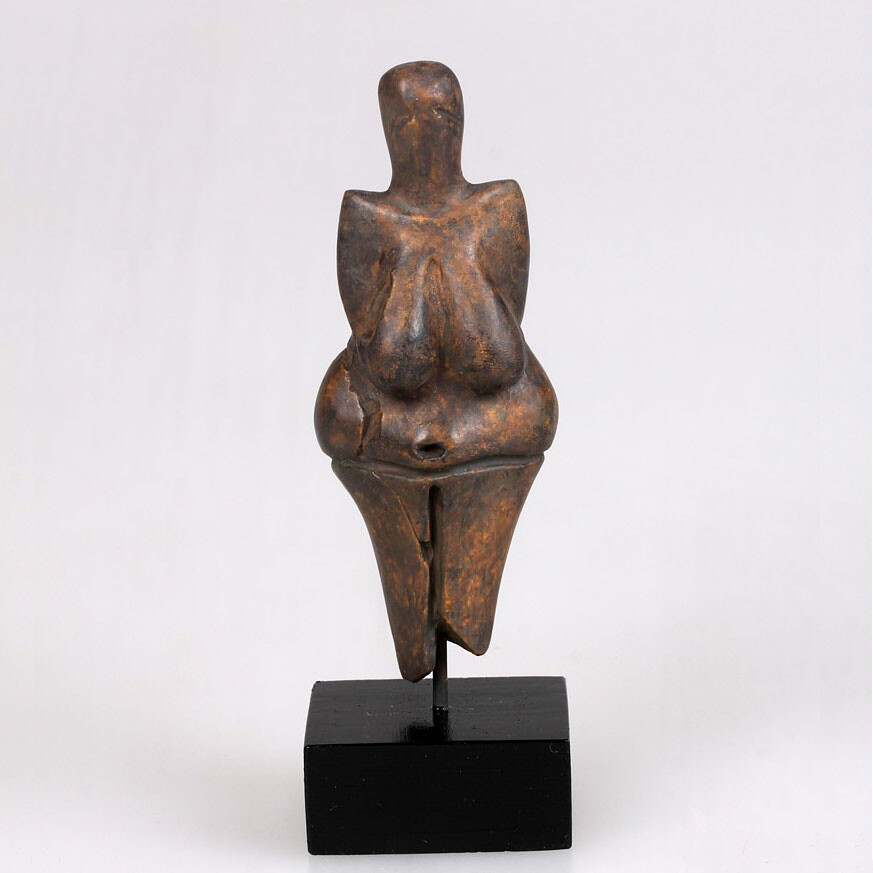
“Věstonická Venuše” (c. 29,000 – 25,000 BCE) from Dolní Věstonice, Mikulov, Moravia, Czech Republic; in the Moravian Museum, Brno, Czech Republic
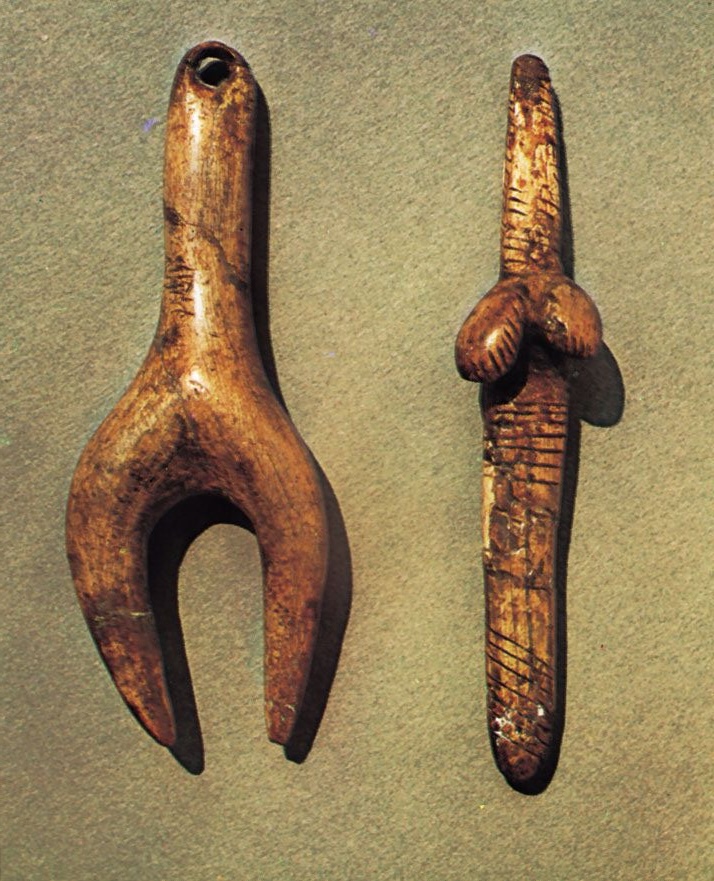
Stylized “Venus” figurines carved in ivory, Aurignacian-Gravettian (c. 24,800 BCE), from Dolní Věstonice, Mikulov, Moravia, Czech Republic; in the Moravian Museum, Brno, Czech Republic

Stone tool flaked on one surface only, known as a uniface blade, and three end scrapers.
The Neolithic era (c. 10,000–3,000 BCE) brought transformative changes as humans transitioned from nomadic lifestyles to settled agricultural communities. This shift necessitated new tools, storage solutions, and domestic objects. Pottery became a defining craft of this period, evolving from simple clay vessels to intricately decorated items. Early pots often featured geometric patterns, reflecting both aesthetic experimentation and cultural symbolism.
Settlements like Skara Brae in Scotland reveal the development of early domestic design. Stone furniture such as beds, shelves, and tables were not only functional but also demonstrated an understanding of spatial organization and permanence. These innovations marked the beginning of design tailored to comfort and utility in daily life.

Majiayao Geometric Bowl 3300–2650 BCE
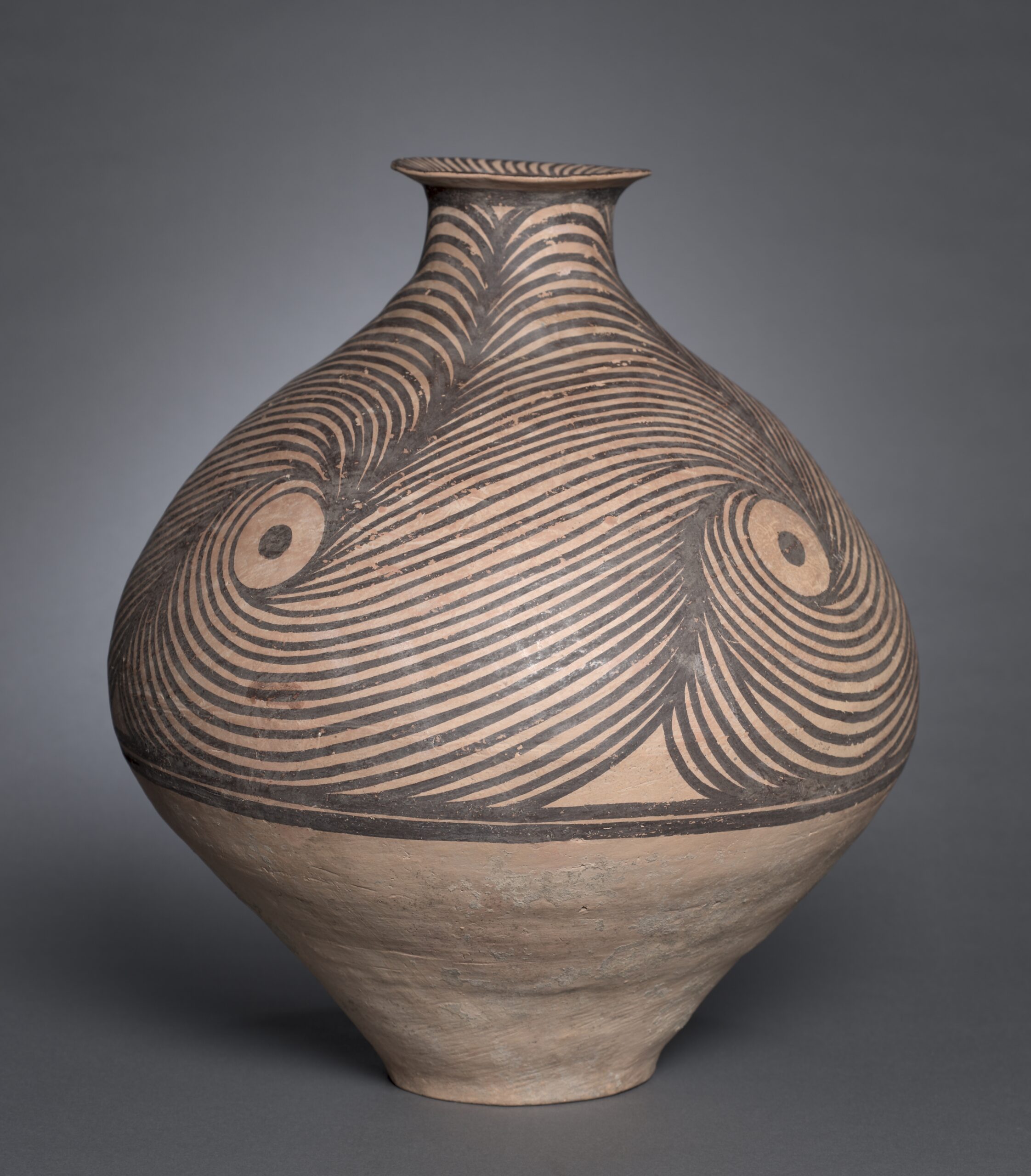
Jar with Spiral Designs
3300–2650 BCE
Northwest China
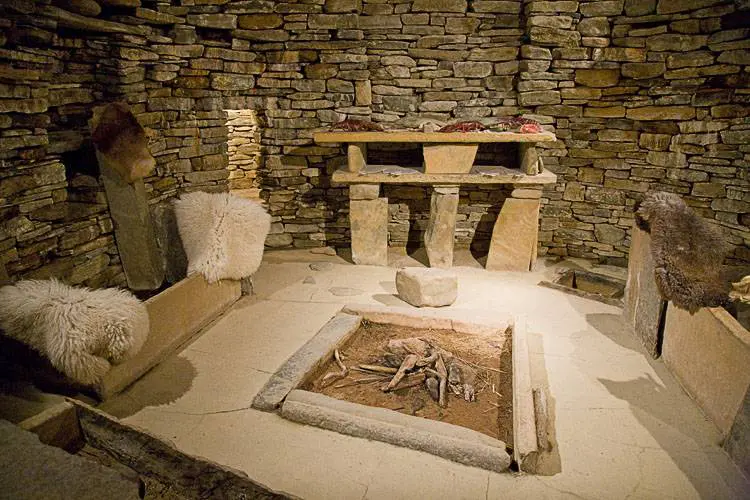
Skara Brae 3100-2500 BCE
The Age of Metals: Craftsmanship and Cultural Identity
The advent of metallurgy around 3300 BCE marked the beginning of the Bronze Age. Tools, weapons, and decorative objects crafted from bronze—a durable alloy of copper and tin—revolutionized design. Bronze allowed for sharper, more precise tools and elaborate decorations, such as engraved weapons and intricately adorned jewelry.
Bronze Age societies often used design to signify social status. Wealthy elites commissioned ceremonial items, such as gilded weapons and ornate vessels, while common people relied on simpler, utilitarian objects. The dual role of design as both a practical necessity and a marker of identity became more pronounced during this era.

Sword 1400 BCE


Ceremonial bronze jian, Dong (Eastern) Zhou dynasty 770–256 BCE
The Iron Age: Strength and Accessibility
The discovery of iron, beginning around 1200 BCE, further advanced toolmaking. Iron was not only stronger than bronze but also more abundant, enabling broader accessibility. Tools such as plows and axes became more durable, improving agriculture and construction.
Iron weapons like swords and shields were often decorated with patterns and inscriptions, blending utility with artistic expression. These designs also reflected cultural values, with motifs often representing protection, power, or religious beliefs.

“Antenna hilt” Hallstatt ‘D’ swords
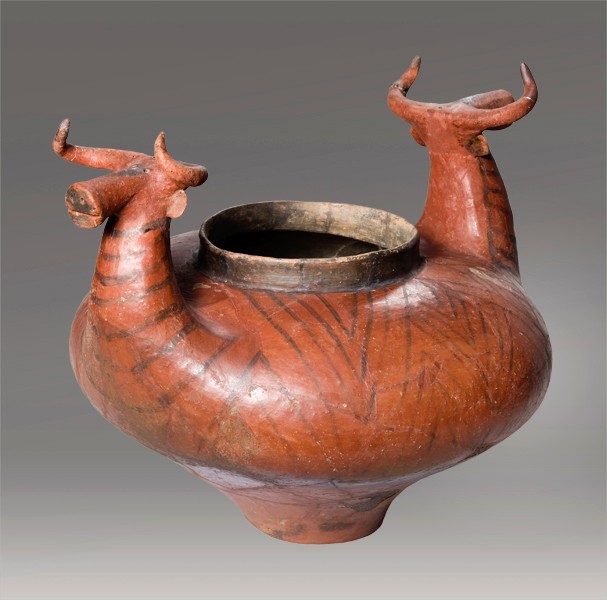
Bailing Vessel 600-500 BCE
The Role of Religion in Early Design
Religious beliefs deeply influenced the development of design. Early humans often attributed natural phenomena to divine forces, creating tools and objects to honor, communicate with, or appease these entities. Ritualistic practices drove the creation of sacred objects, from ceremonial axes and ritual knives to incense burners and amulets.
Sacred spaces also played a pivotal role in shaping early design. Structures like Göbekli Tepe and Stonehenge were among the first monumental architectural achievements, designed for worship and aligned with celestial events. These constructions demonstrated an early mastery of geometry and materials, serving as both functional spaces and symbols of spiritual connection.

Stonehenge 3100 – 1600 BC
Burial Practices and the Afterlife
The design of burial artifacts reflected profound cultural and spiritual values. Early graves often included grave goods, such as tools, weapons, and jewelry, intended to accompany the deceased into the afterlife. In ancient Egypt, tombs contained intricately crafted furniture, like gilded chairs and painted chests, symbolizing the wealth and status of the buried individual.
Religious practices also influenced the decoration of everyday objects. For instance, Egyptian amulets, often inscribed with protective symbols like the ankh, combined aesthetic beauty with spiritual significance. Across cultures, the fusion of functionality, symbolism, and artistry underscored the integral role of religion in early design.
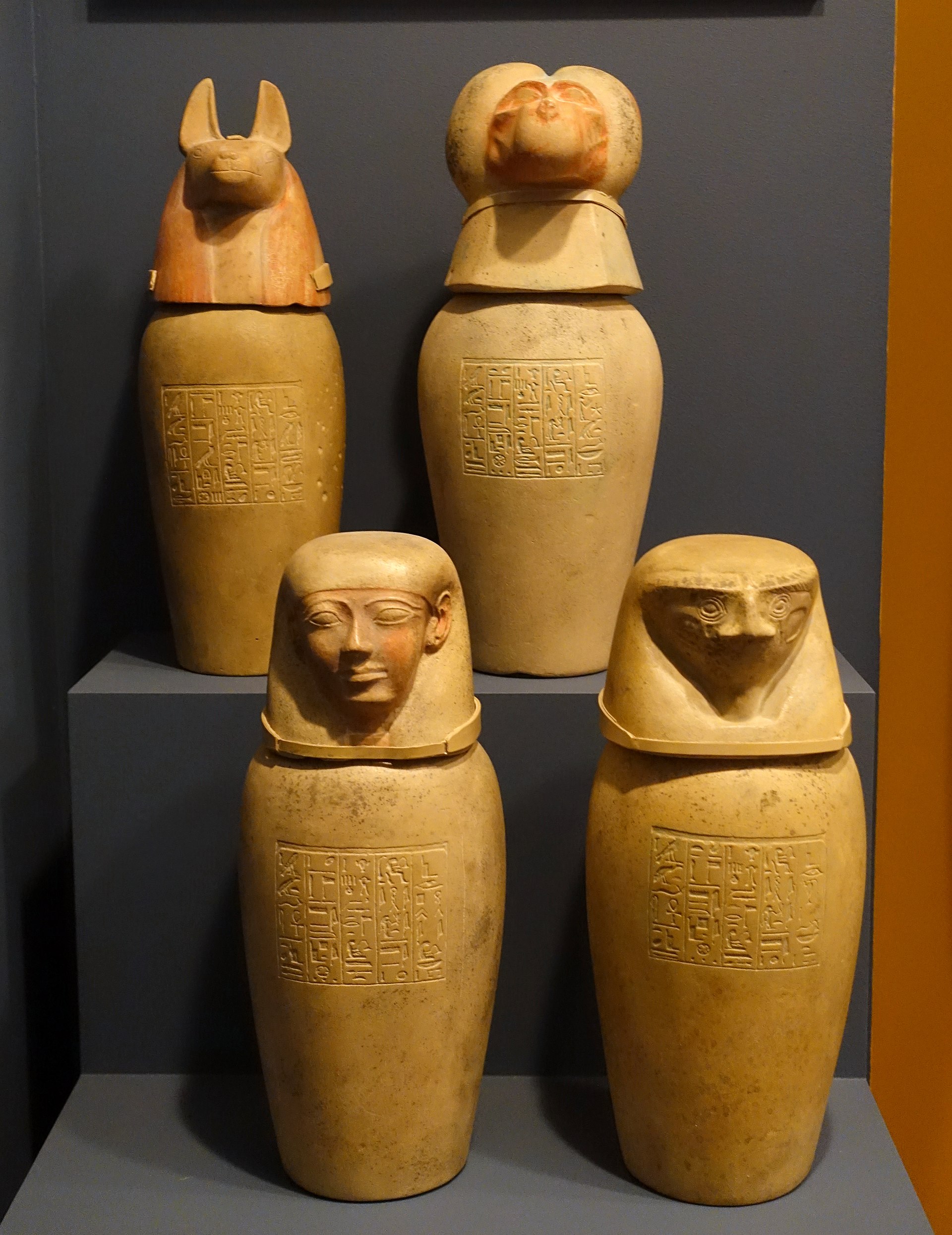
Canopic jars (casts), Egypt, 945–712 BC
Regional Differences and Cultural Exchanges
The design traditions of early civilizations varied widely but also shared common themes. In Mesopotamia, utilitarian objects often bore decorative patterns, reflecting a blend of practicality and artistry. In Egypt, design emphasized symmetry, permanence, and religious symbolism, while in Asia, craftsmanship focused on balance, harmony, and high-quality materials like jade and lacquer.
Trade routes, such as the Silk Road, facilitated cultural exchanges, spreading materials, techniques, and ideas across regions. This interconnectedness enriched design practices, creating a tapestry of influences that shaped the evolution of human creativity.
Categories of Early Human Tools and Artifacts
1. Food Acquisition and Processing:
Early tools like scrapers, knives, and spearheads were vital for hunting and preparing food. Later innovations included sickles for harvesting crops and millstones for grinding grain, reflecting the shift to agriculture.
2. Clothing and Textile Production:
Bone needles, spindle whorls, and looms facilitated the creation of clothing and textiles. These tools not only served practical needs but also allowed for cultural expression through patterns and dyes.
3. Storage and Domestic Tools:
Pottery, baskets, and wooden containers enabled the storage of food, water, and other goods. Early domestic tools like mortars and pestles also became essential for daily life.
4. Housing and Furniture:
Early shelters evolved from simple lean-tos to sophisticated structures with carved stone furniture. Settlements like Skara Brae reveal the integration of functional and aesthetic design in living spaces.
5. Religious and Ceremonial Objects:
Items such as ceremonial vessels, altars, and amulets were crafted for worship and rituals. These artifacts often displayed intricate designs imbued with spiritual meaning.
6. Burial and Funerary Artifacts:
Grave goods, from jewelry to weapons, reflected beliefs about the afterlife. Egyptian tombs, for instance, contained exquisitely crafted objects designed to ensure the deceased’s safe journey to the next world.
7. Tools for Art and Expression
Artistic expression began early in human history, as evidenced by cave paintings, carvings, and decorated objects. Tools for creating art, such as pigments, brushes, and engraving tools, represent a unique category. These artifacts were often tied to ritualistic or storytelling purposes. For example:
• Pigments: Early humans used natural materials like ochre, charcoal, and ground minerals to create vibrant colors for cave art, as seen in Lascaux and Altamira.
• Engraving Tools: Flint and bone tools were used to carve patterns into wood, ivory, or stone. The engraved forms often carried symbolic meanings, such as depictions of animals for hunting rituals.
• Musical Instruments: Early instruments like flutes made from bird bones or mammoth tusks served both ceremonial and recreational purposes, demonstrating an overlap between function and culture.
8. Tools for Navigation and Exploration
Human expansion into new territories necessitated tools for navigation and wayfinding:
• Early Maps: Carved stone maps or marked clay tablets, such as those found in Mesopotamia, are among the first examples of spatial understanding transformed into design.
• Sundials and Early Astronomy Tools: Ancient devices like shadow sticks and primitive star charts allowed humans to track time and celestial events, which were essential for agriculture and navigation.
• Boats and Rafts: Early watercraft, such as dugout canoes, required sophisticated design to enable migration and trade. These tools often incorporated natural materials, such as reeds or hollowed logs, and evolved into larger, more complex vessels.
9. Tools for Agriculture and Land Management
The rise of agriculture introduced tools that transformed landscapes and boosted productivity:
• Irrigation Systems: Early civilizations in Mesopotamia, Egypt, and the Indus Valley engineered canals, levees, and dikes to control water flow for crops.
• Plows and Seed Drills: The design of plows advanced from simple wooden implements to more robust tools made from metal. Seed drills, a later innovation, helped sow crops more efficiently.
• Terracing and Earthworks: Societies like the Incas used terracing to cultivate mountainous terrain, demonstrating an intricate understanding of engineering and design.
10. Weapons and Tools for Defense
Tools used for defense and hunting evolved into highly specialized categories:
• Spears and Arrows: Early projectiles showed significant variation, from simple sharpened sticks to composite tools with stone or metal tips.
• Shields and Armor: Shields crafted from leather, wood, or bronze were both functional and often highly decorated, serving as symbols of status and protection.
• Siege Tools: As civilizations grew, tools like battering rams and early catapults emerged, demonstrating the blending of practical design with military strategy.
11. Tools for Trade and Currency
Trade and economic exchange required tools for measurement, transport, and symbolic value:
• Scales and Weights: Early balance scales and standardized weights allowed fair trade, marking an intersection of utility and precision design.
• Transport Containers: Amphorae and large pottery jars were designed for storing and transporting goods like grain, oil, and wine, often marked with distinctive designs to indicate origin or ownership.
• Proto-Currency: Decorative items such as beads, shells, and small metal objects were used as a form of currency, blending aesthetic appeal with economic function.
12. Tools for Social Organization and Record-Keeping
Design also played a role in creating systems for managing growing communities:
• Early Writing Implements: Styluses for inscribing clay tablets and ink brushes for papyrus or silk marked the beginning of written communication.
• Tokens and Seals: In Mesopotamia, clay tokens and cylinder seals were used to represent goods and verify transactions, showcasing an early integration of design into administrative systems.
• Calendars and Timekeeping: Early timekeeping tools, such as lunar calendars and water clocks, were essential for organizing agricultural and religious activities.
Mesopotamia: The Dawn of Civilization and Artistic Innovation
Mesopotamia, often called the “Cradle of Civilization,” gave rise to the world’s first urban societies. Nestled between the Tigris and Euphrates rivers, this region saw the emergence of cities like Ur, Babylon, and Nineveh, which became hubs of innovation, culture, and artistic expression.
Art in Mesopotamia was intrinsically linked to the divine and the ruling elite. Ziggurats, towering temple complexes, were the architectural marvels of this era. Constructed with mud bricks, these structures served as places of worship and were believed to bridge the heavens and the earth. Iconic ziggurats, such as the one in Ur, showcased Mesopotamian ingenuity in creating functional yet symbolic architecture.
Relief carvings adorned the walls of palaces and temples, depicting scenes of warfare, hunting, and divine rituals. The Assyrian reliefs from the palace of Ashurbanipal, for example, illustrate the king’s prowess in battle and his close relationship with the gods. These works not only celebrated rulers but also conveyed the might of empires to their subjects and enemies alike.
Applied arts in Mesopotamia were equally remarkable. Intricate jewelry made of gold, lapis lazuli, and carnelian adorned the wealthy, while everyday objects like pottery and tools reflected both practicality and aesthetic sensibility. Animal motifs, such as lions symbolizing power and eagles representing divine guardianship, were prevalent in seals, amulets, and decorative objects. The Ishtar Gate of Babylon, with its vibrant blue tiles and depictions of sacred animals, remains a testament to the Mesopotamians’ skill in combining art and architecture.
Socially, artists and craftsmen occupied a lower tier, serving the demands of temples, kings, and nobility. Despite their status, their works became enduring symbols of Mesopotamian culture, influencing subsequent civilizations in the region.
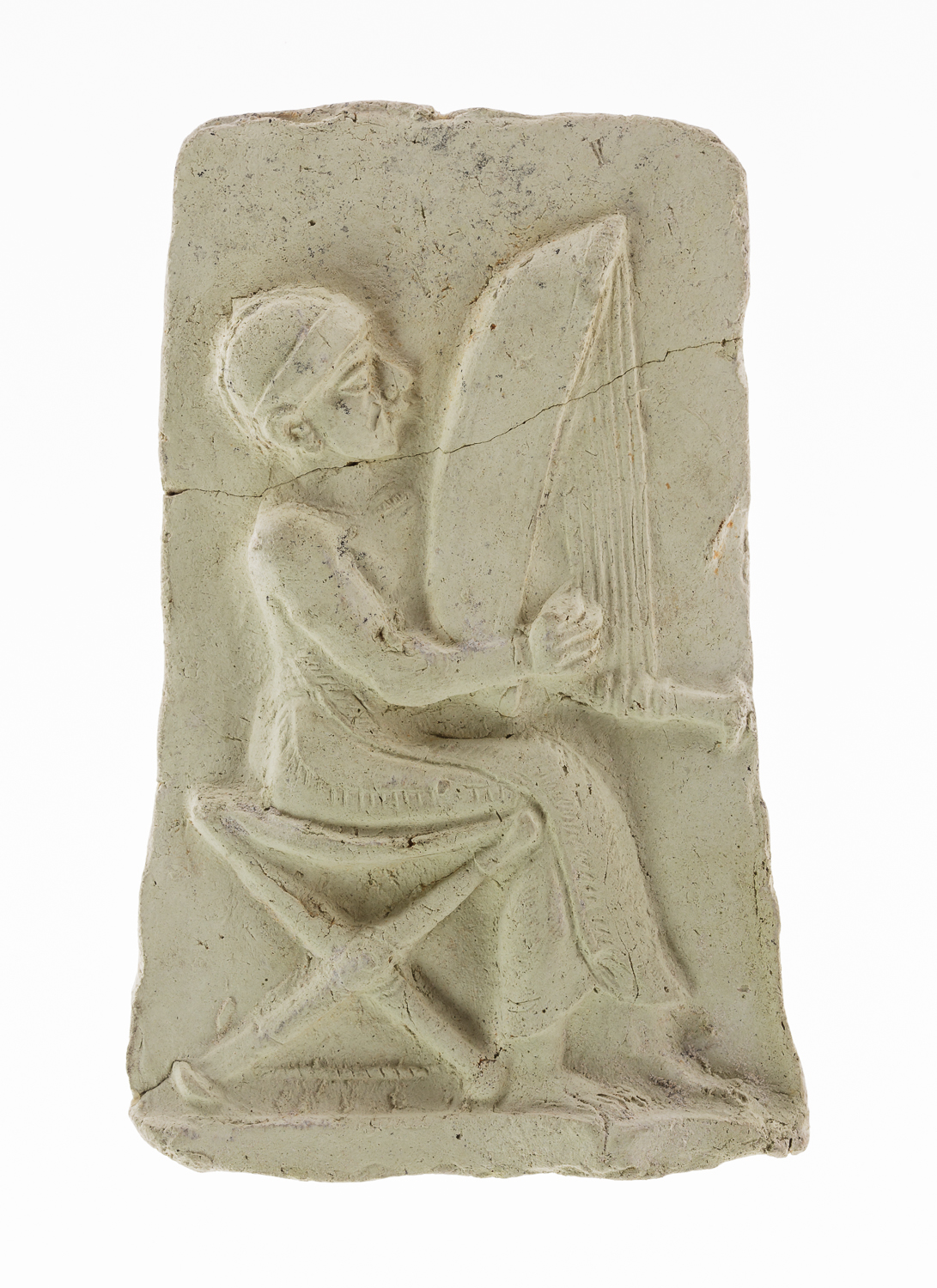
Plaque Showing a Harpist
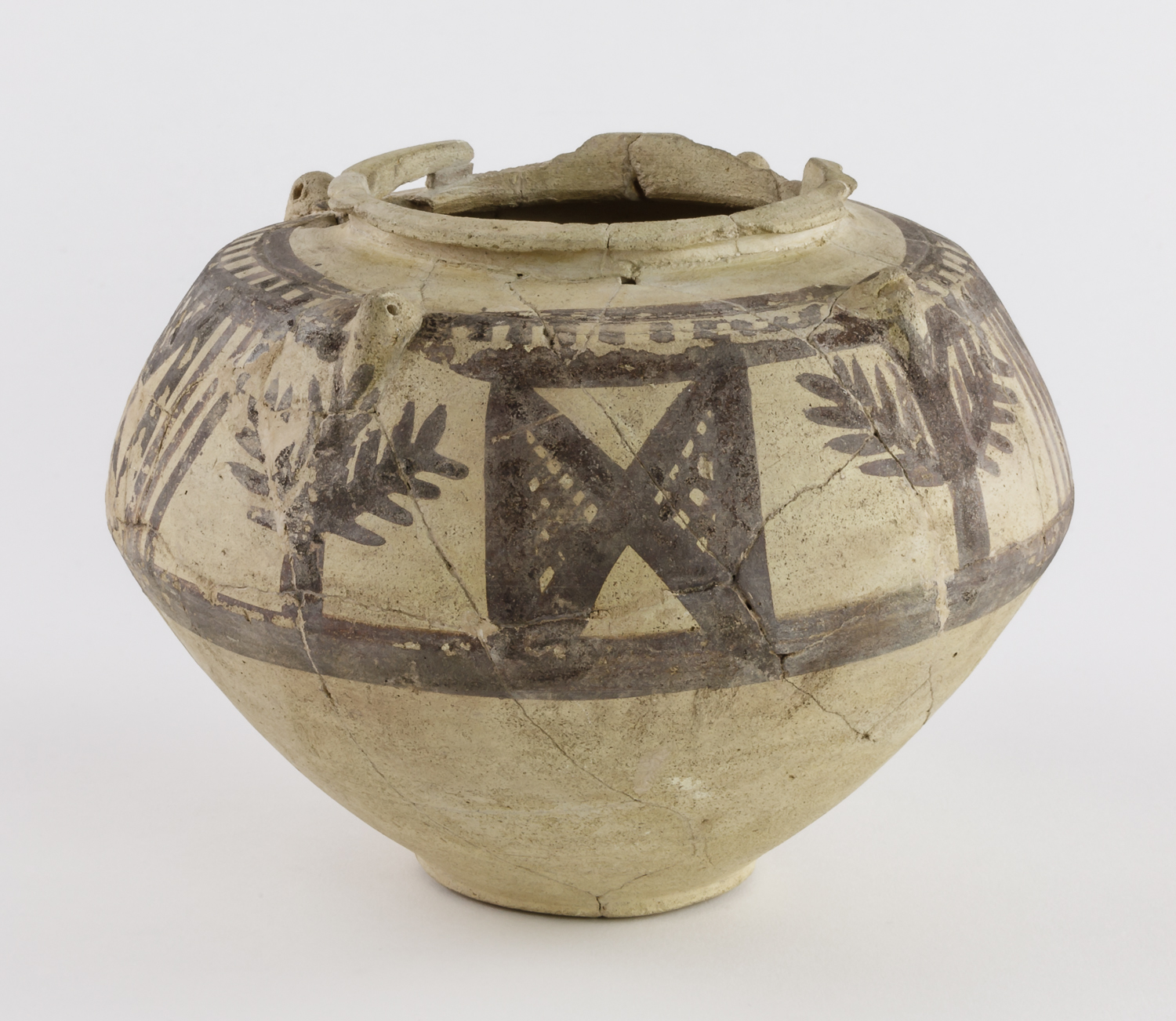
Four-Lugged Vessel

The silver boat model 2,600 BCE
Egypt: Eternity Captured in Stone and Gold
In ancient Egypt, art was a conduit for the eternal. Every sculpture, painting, and structure was imbued with the purpose of transcending time, reflecting the Egyptians’ profound belief in the afterlife and the divine order. The pyramids of Giza, towering over the desert sands, epitomize this ethos. These monumental tombs were not only architectural feats but also spiritual beacons designed to guide the pharaohs’ souls to immortality.
Egyptian art adhered to strict conventions. Figures were depicted in composite views, with heads and legs shown in profile while torsos faced forward. This approach ensured clarity and timelessness, qualities essential for artworks meant to last forever. Reliefs and murals in tombs, such as those in the Valley of the Kings, depicted scenes of daily life, religious rituals, and mythical journeys, offering a vivid glimpse into ancient Egyptian beliefs and practices.
The applied arts flourished in Egypt, producing objects of stunning beauty and utility. Furniture, such as the intricately carved chairs of Tutankhamun’s tomb, demonstrated both functional design and exquisite craftsmanship. Jewelry adorned with gold, turquoise, and faience served both decorative and protective purposes, as many pieces were imbued with symbolic meaning. Amulets like the scarab beetle symbolized rebirth, while the ankh represented life itself.
Religion permeated every aspect of Egyptian art. Temples like those at Karnak and Luxor were adorned with colossal statues and intricate carvings that celebrated the gods and the pharaohs’ divine status. The Sphinx, a fusion of human and lion, symbolized royal authority and protection.
Artists in Egypt held a unique position. While their work was essential to religious and royal ceremonies, they were viewed as skilled laborers rather than individual creators. Despite this, their legacy endures in the unparalleled beauty and sophistication of their creations, which continue to captivate modern audiences.

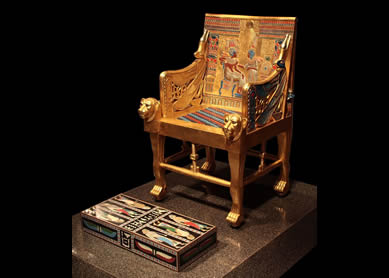
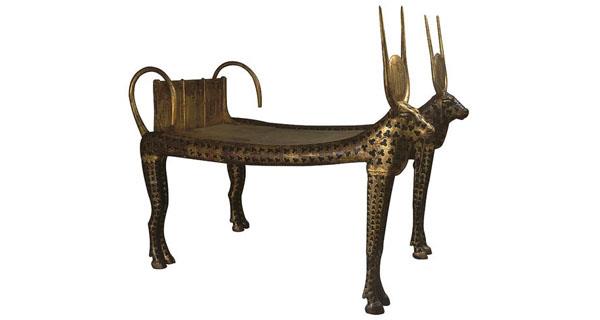
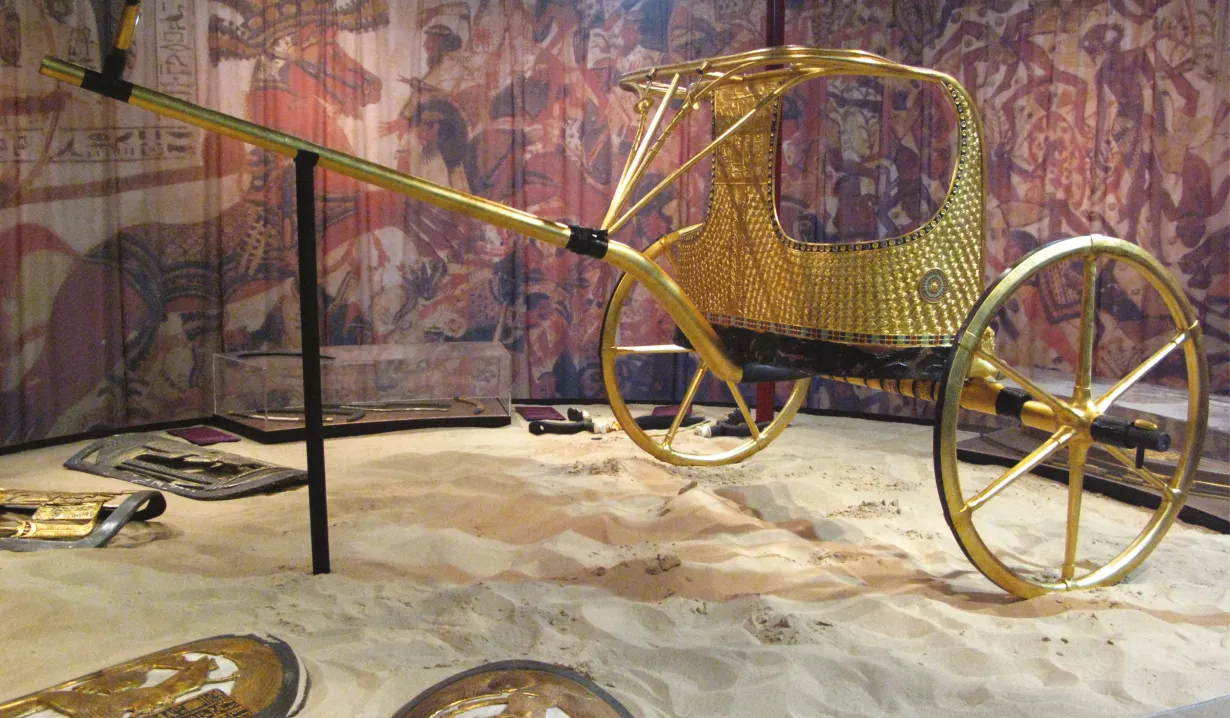
An accurate replica of one of the chariots found in Tutankhamun’s tomb, on display in the touring exhibition Tutankhamun: His Tomb and His Treasures. Image: Robert B Partridge
Ancient Greece: The Birthplace of Humanism and Aesthetic Excellence
In ancient Greece, art became a celebration of humanity, intellect, and idealism. Influenced by earlier cultures like Egypt and Mesopotamia, Greek artists transformed these traditions into a distinctly human-centered aesthetic. The kouros statues of the Archaic period, inspired by Egyptian forms, depicted youthful male figures with rigid poses. Over time, Greek sculptors like Polykleitos and Phidias refined these forms, creating lifelike works that emphasized balance, proportion, and movement.
Classical Greek sculpture reached its pinnacle with masterpieces like the Parthenon sculptures. These works, housed in Athens’ most iconic temple, depicted gods, heroes, and mythological scenes with unprecedented realism and grace. The Greeks’ understanding of anatomy, combined with their pursuit of ideal beauty, set the standard for Western art for centuries to come.
Architecture in ancient Greece was equally groundbreaking. The development of the Doric, Ionic, and Corinthian orders introduced a system of harmony and proportion that defined temple design. Structures like the Parthenon, the Temple of Apollo at Delphi, and the Erechtheion were not just places of worship but also symbols of civic pride and cultural achievement.
Greek applied arts, particularly pottery, offered a window into the daily lives and beliefs of its people. Black-figure and red-figure vases featured intricate scenes of mythology, athletic contests, and domestic activities. These functional objects, used for storing oil, wine, and water, were also works of art that reflected the cultural values of their time.
Socially, ancient Greece valued intellectual and artistic pursuits. While craftsmen were considered lower in status, poets, philosophers, and politicians held positions of high esteem. The political structures of city-states like Athens fostered a culture of debate, creativity, and innovation, allowing art and philosophy to flourish. Figures like Socrates, Plato, and Aristotle influenced not only Greek thought but also the trajectory of Western civilization.
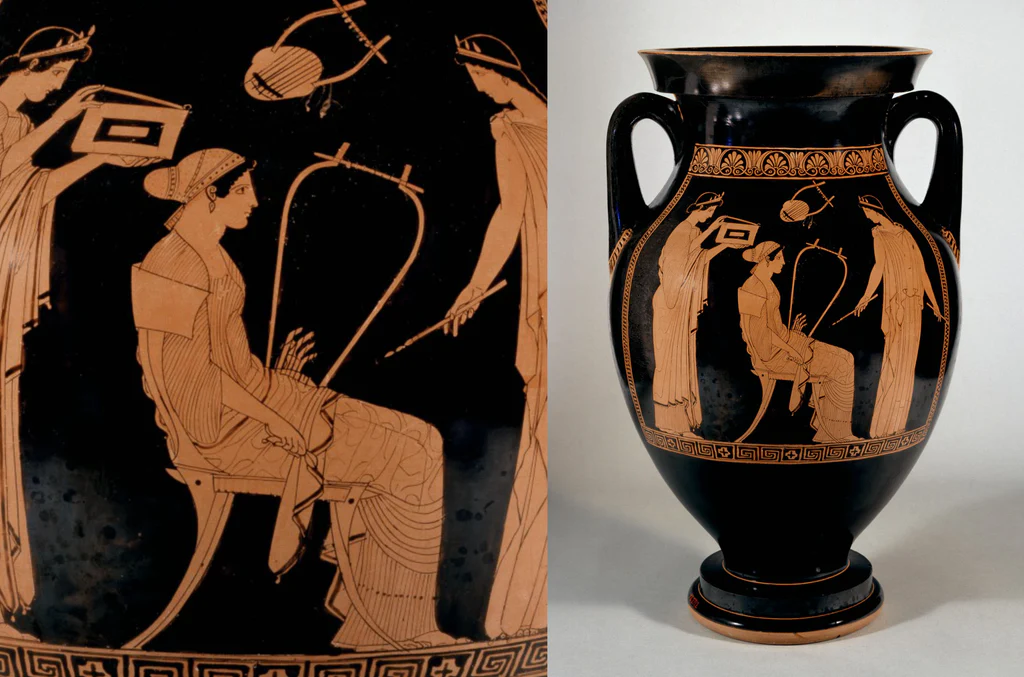
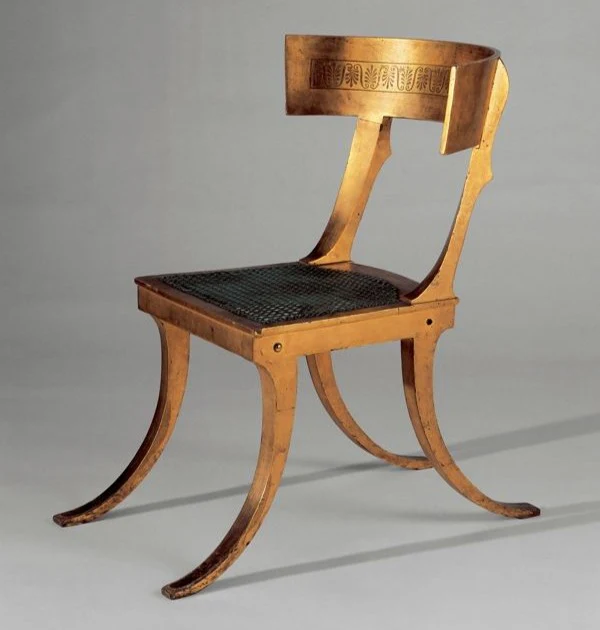
Attic pottery from 460–450 BC, depicting a woman seated on a Klismos while playing a barbitos
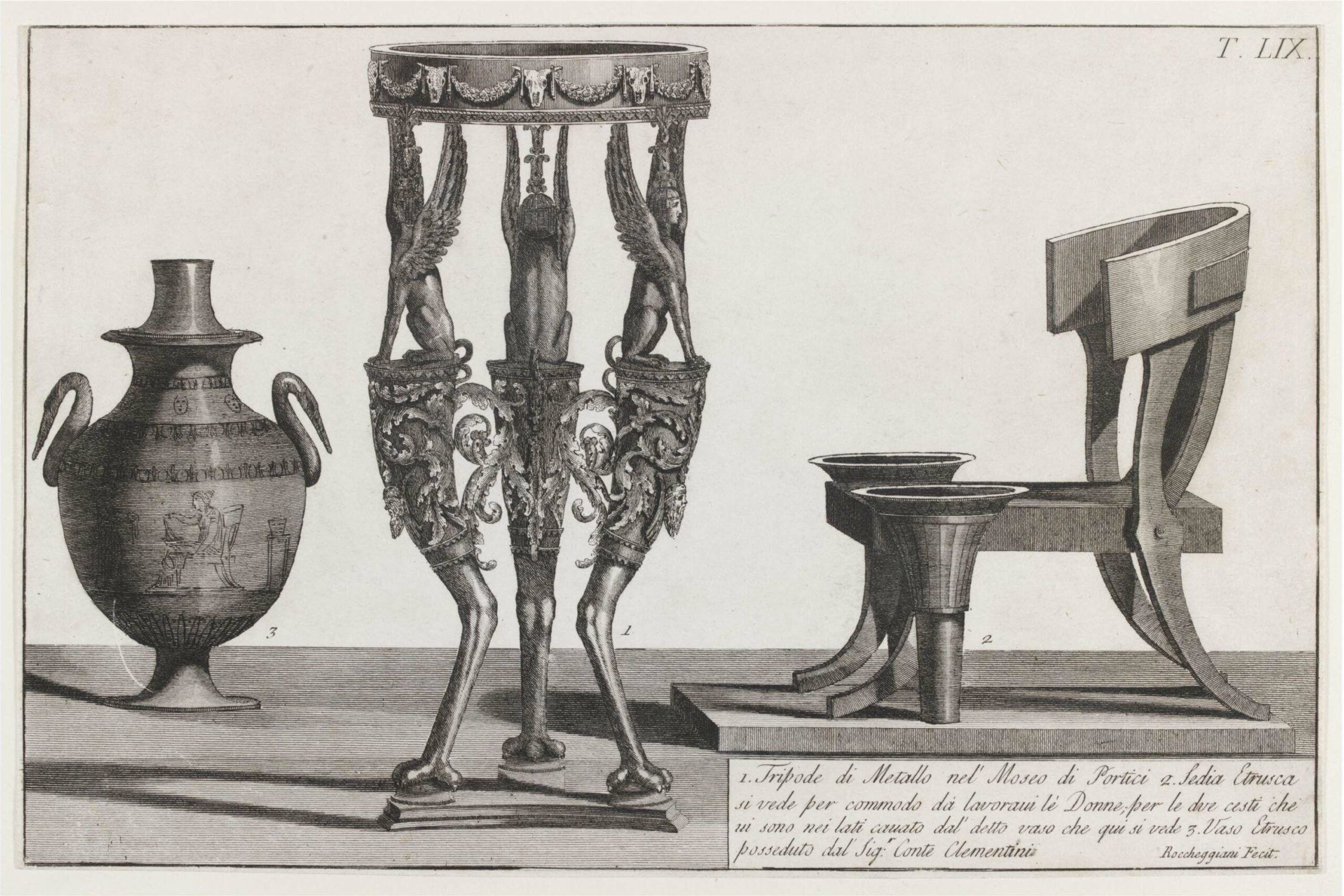
Lorenzo Roccheggiani of a reconstruction of a Klismos (on the right) from a painting on an ‘Etruscan’ pottery amphora, shown on the left
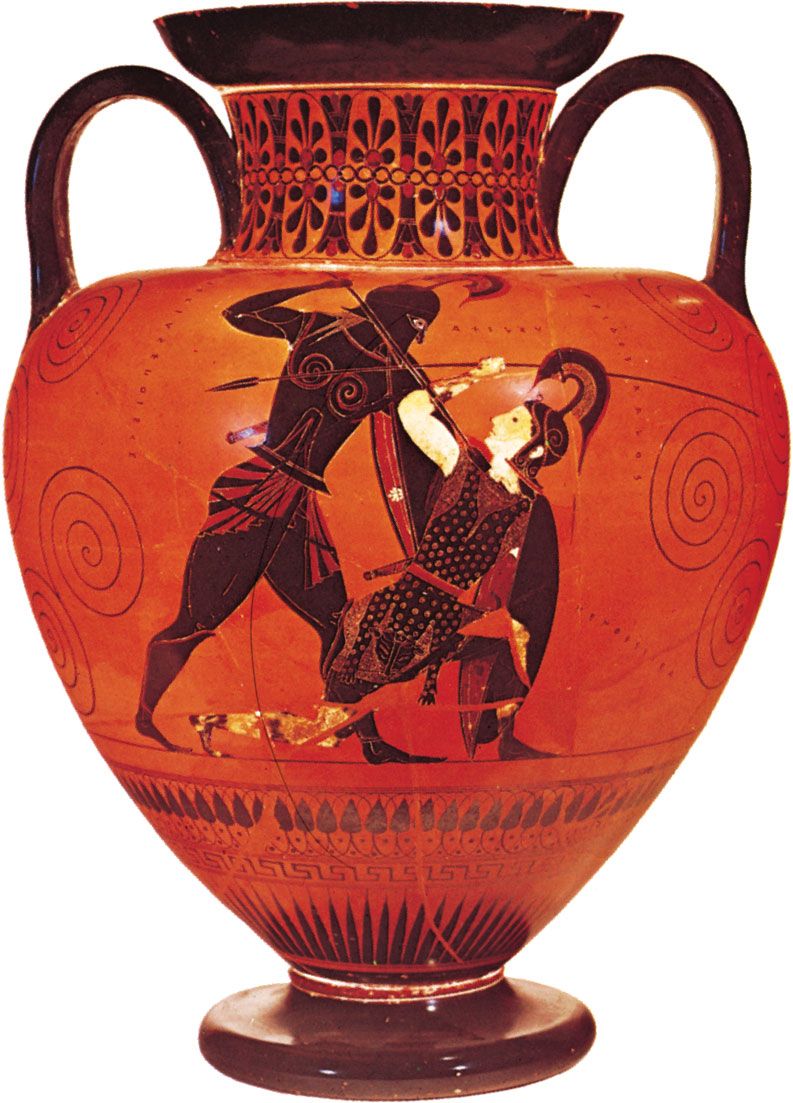
Achilles slaying Penthesilea, the queen of the Amazons, Attic black-figure amphora signed by Exekias, c. 530–525 BCE
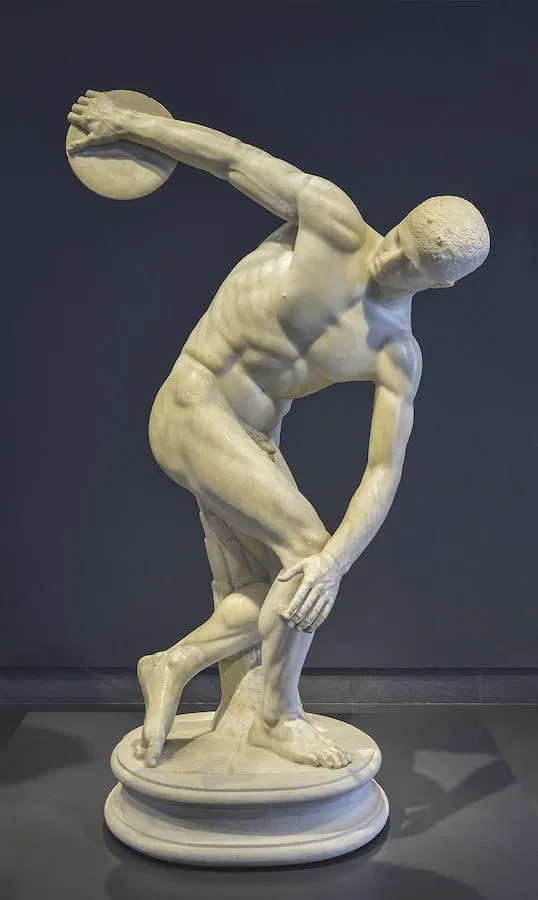
Discobolus 500 BCE
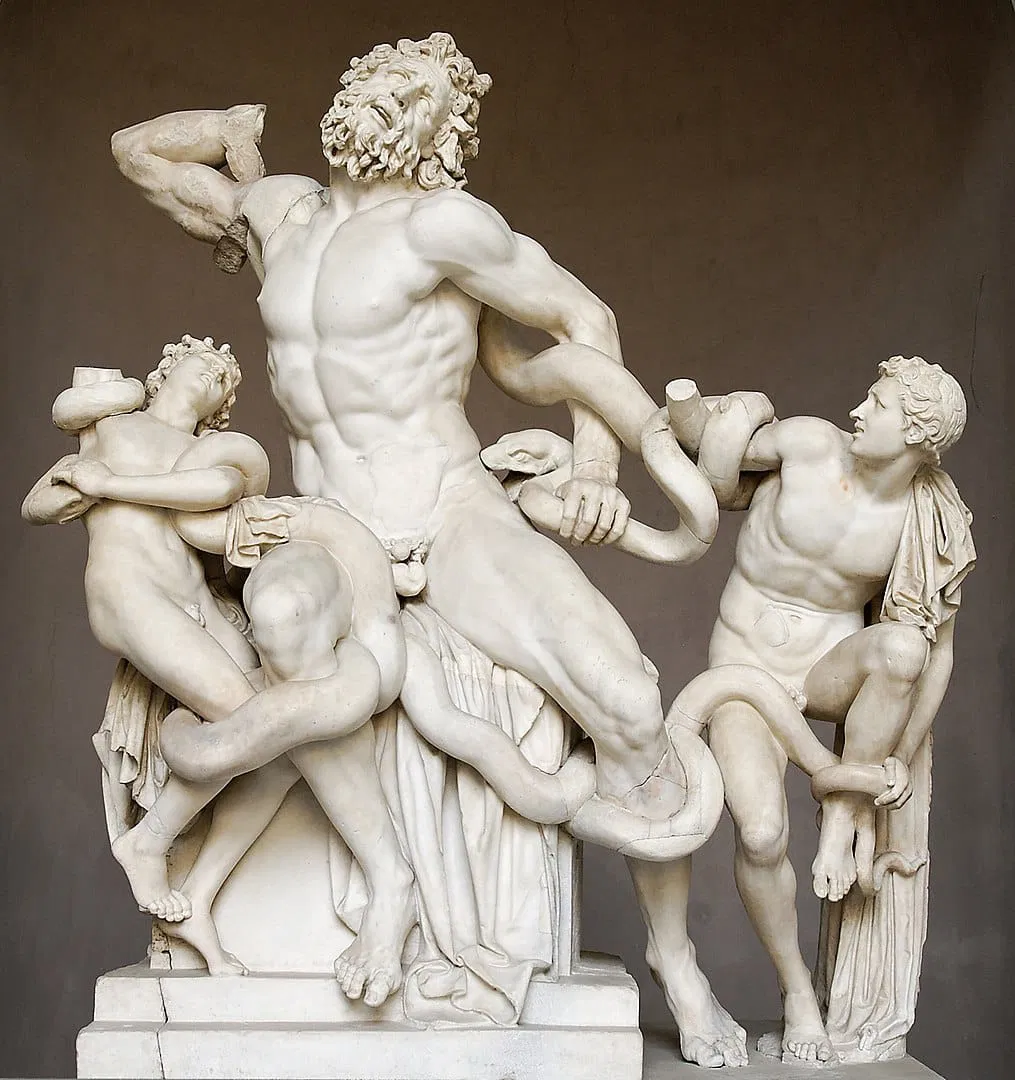
Laocoön and His Sons
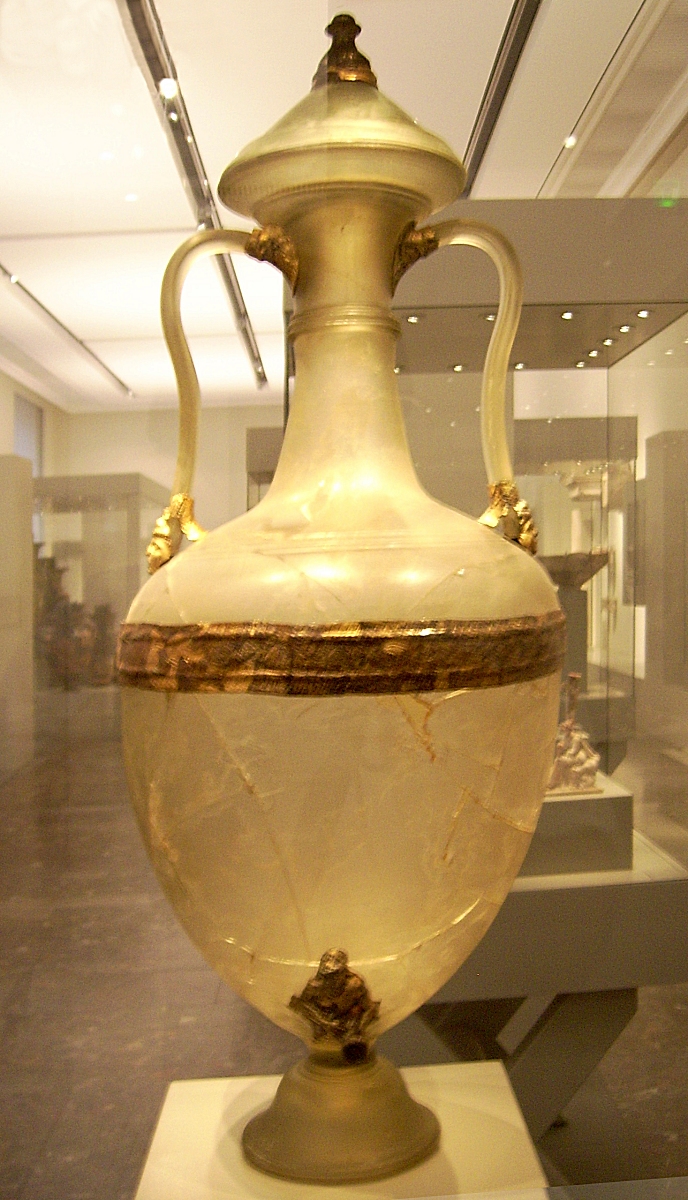
Ancient Greek glass amphorafrom the Hellenistic period.
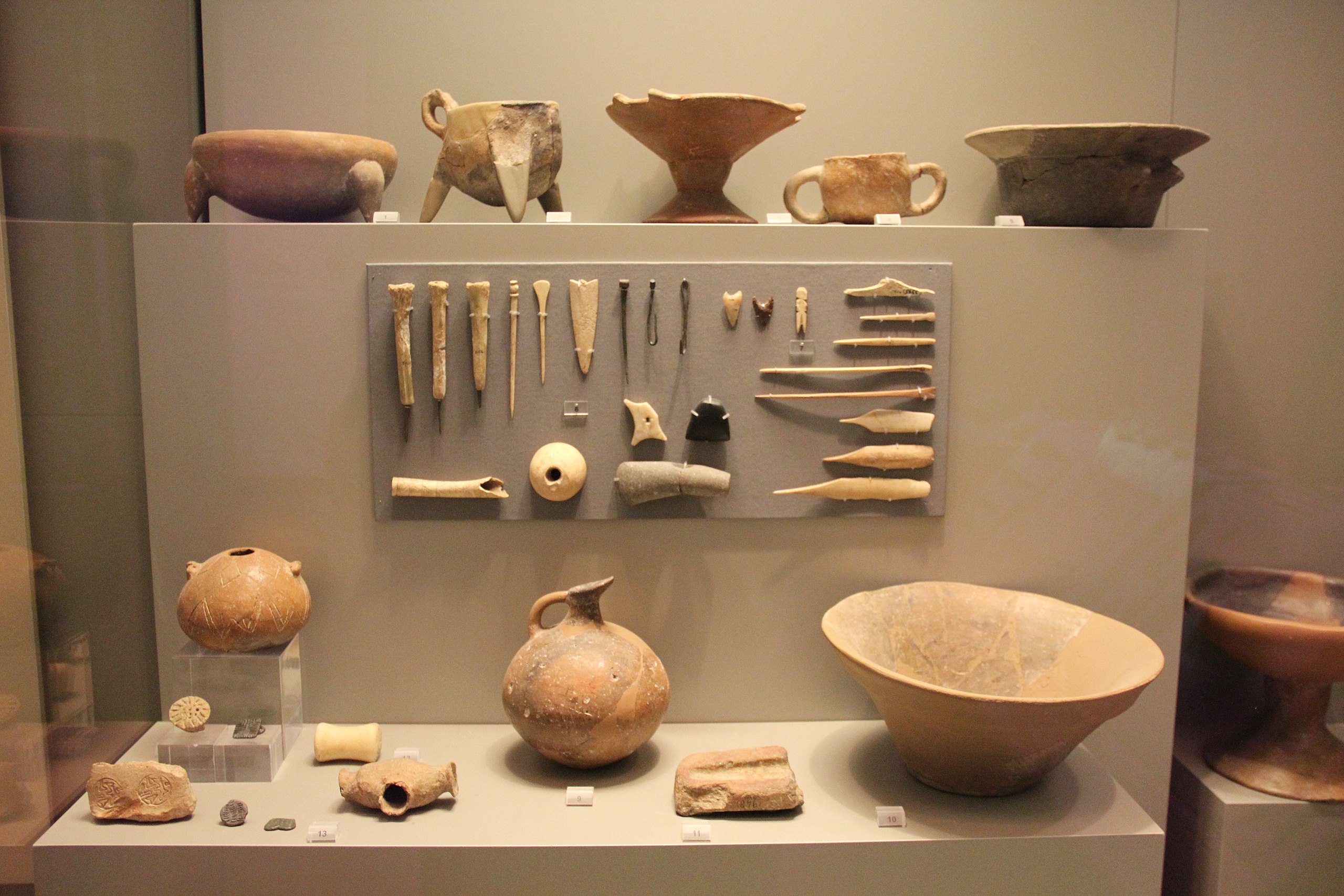
Connections and Legacy
The artistic traditions of Mesopotamia, Egypt, and Greece were not isolated; they were part of a continuum of cultural exchange and adaptation. Mesopotamian motifs and techniques influenced Egyptian art, while Greek artists adopted and transformed Egyptian conventions into a more dynamic and human-centered style.
Together, these civilizations laid the foundation for Western art and culture. Mesopotamia introduced narrative reliefs and symbolic motifs, Egypt perfected monumental and religious art, and Greece elevated humanism and aesthetic idealism. Their combined legacies shaped the visual language of Europe, inspiring the Renaissance and modern artistic movements.
Art in these ancient cultures was far more than decoration—it was a profound expression of identity, belief, and ambition. It reflected the complexities of their societies, their understanding of the world, and their aspirations for immortality. Through their enduring creations, these civilizations continue to speak to us across millennia, reminding us of humanity’s shared heritage and creative potential.
Roman Art and Architecture: A Fusion of Influences
Ancient Rome, a civilization that grew from a small city-state to a sprawling empire, was marked by its ability to adapt, absorb, and innovate. Roman art and culture drew heavily from earlier civilizations, particularly Greece and Etruria, but transformed these influences into something uniquely Roman.
Roman architecture became one of the civilization’s most enduring legacies. Innovations such as the arch, the dome, and the use of concrete allowed the Romans to construct buildings on an unprecedented scale. Structures like the Colosseum in Rome, the aqueducts, and the Pantheon exemplify the Romans’ engineering prowess and their ability to combine functionality with grandeur. The Pantheon, with its massive dome and central oculus, symbolized Rome’s architectural ambition and its desire to unite the heavens and the earth.
Public spaces were central to Roman life and showcased their artistic achievements. Forums, basilicas, and public baths were adorned with statues, mosaics, and frescoes. These spaces were designed not only for practical use but also to convey the power and sophistication of the Roman state. The triumphal arches, such as the Arch of Titus, celebrated military victories and solidified the emperor’s divine authority in the eyes of the populace.
Roman sculpture, inspired by Greek models, focused on realism. Portraits, busts, and statues often captured the individual characteristics of their subjects, from the wrinkles of aging senators to the idealized features of emperors like Augustus. This veristic approach reflected Roman values, emphasizing individuality, civic duty, and the continuity of lineage.
The applied arts thrived in the Roman Empire, with intricate mosaics, pottery, metalwork, and glassware decorating homes and public buildings. Frescoes in places like Pompeii reveal the Romans’ love for vibrant colors and detailed scenes depicting mythology, landscapes, and daily life. These artworks not only served aesthetic purposes but also reflected the tastes and aspirations of their patrons.
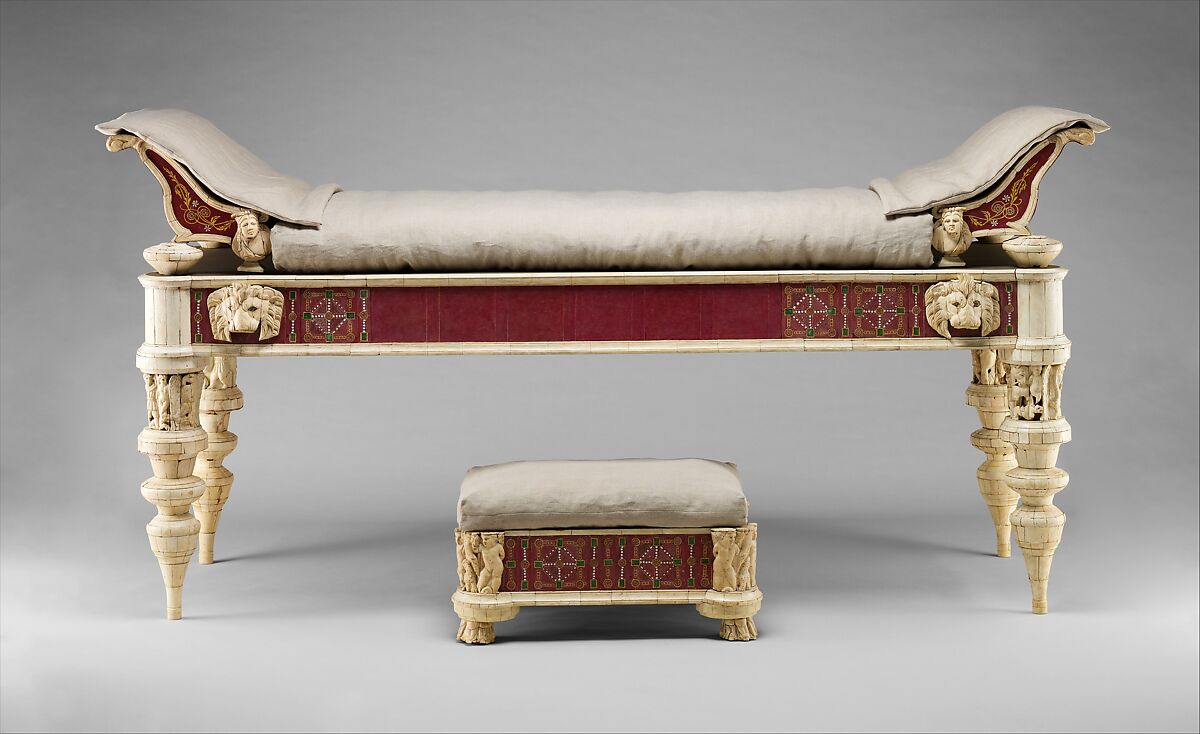
Couch and footstool with bone carvings and glass inlays 1st–2nd century CE
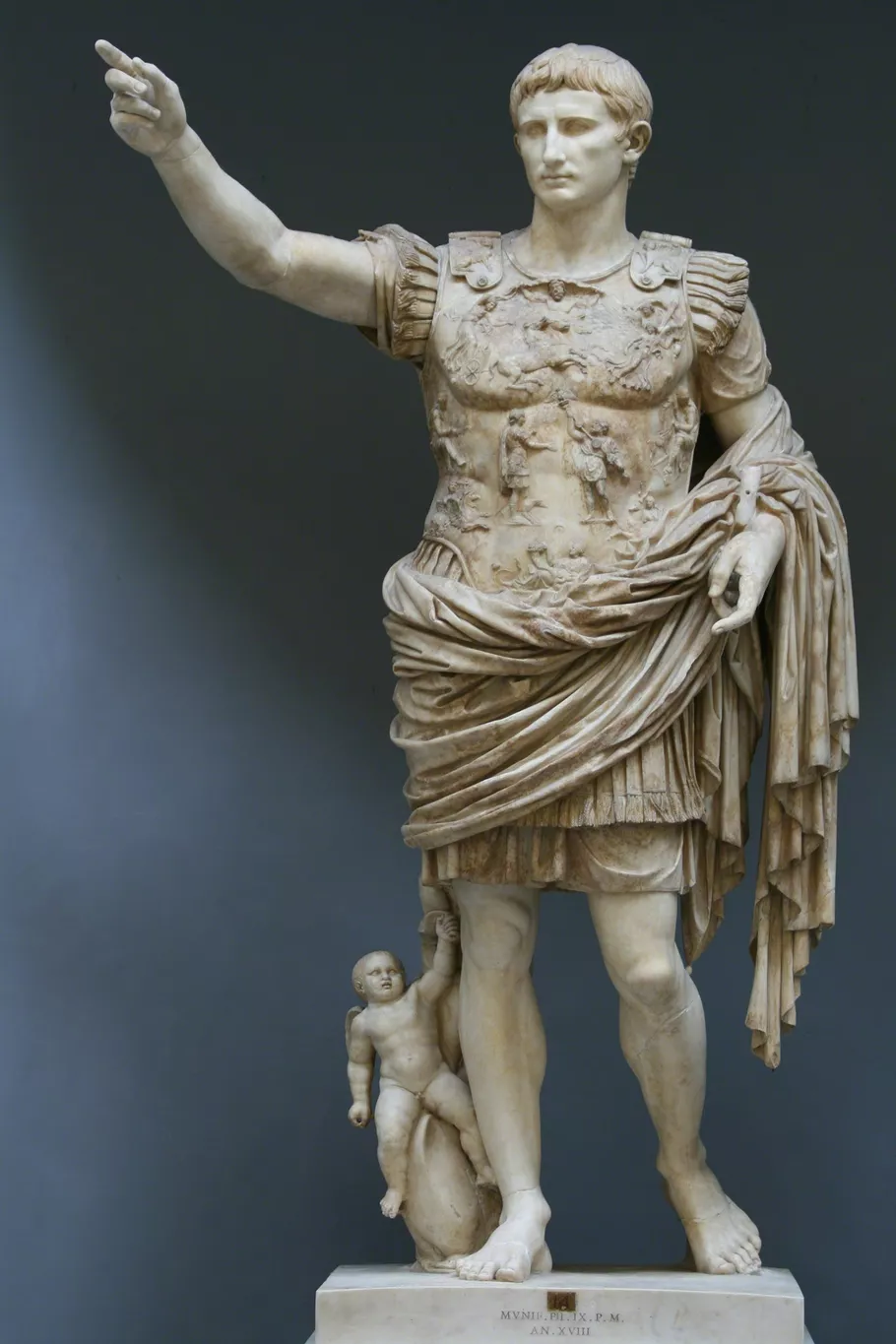
Augustus of Prima Porta, early 1st century
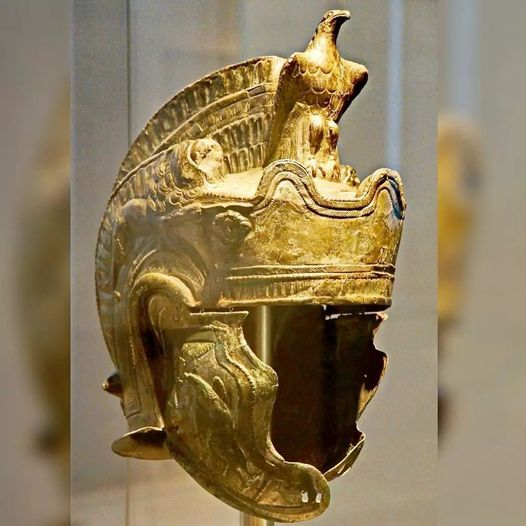
The Spread of Roman Culture: Art as a Tool of Empire
As Rome expanded its territories, it spread its culture, art, and architecture across Europe, North Africa, and the Middle East. Roman roads, aqueducts, and cities became physical embodiments of the empire’s reach, ensuring that Roman culture took root in conquered lands.
The concept of Romanization—the process by which local populations adopted Roman customs, language, and governance—was central to this expansion. Cities like Gaul’s Lugdunum (modern Lyon) and Britain’s Londinium (modern London) featured amphitheaters, temples, and bathhouses modeled on Roman designs. This integration of Roman culture with local traditions created a unique blend of art and architecture, evident in regions as diverse as Hispania, Egypt, and Dacia.
Roman art often depicted themes of conquest and governance, reinforcing the empire’s power and unity. Coins, reliefs, and monumental inscriptions celebrated the emperor’s divine right to rule and conveyed propaganda to distant provinces. For instance, Trajan’s Column in Rome commemorates the emperor’s military campaigns in Dacia through a spiraling narrative relief, blending storytelling with monumental art.

Pont du Gard Aqueduct
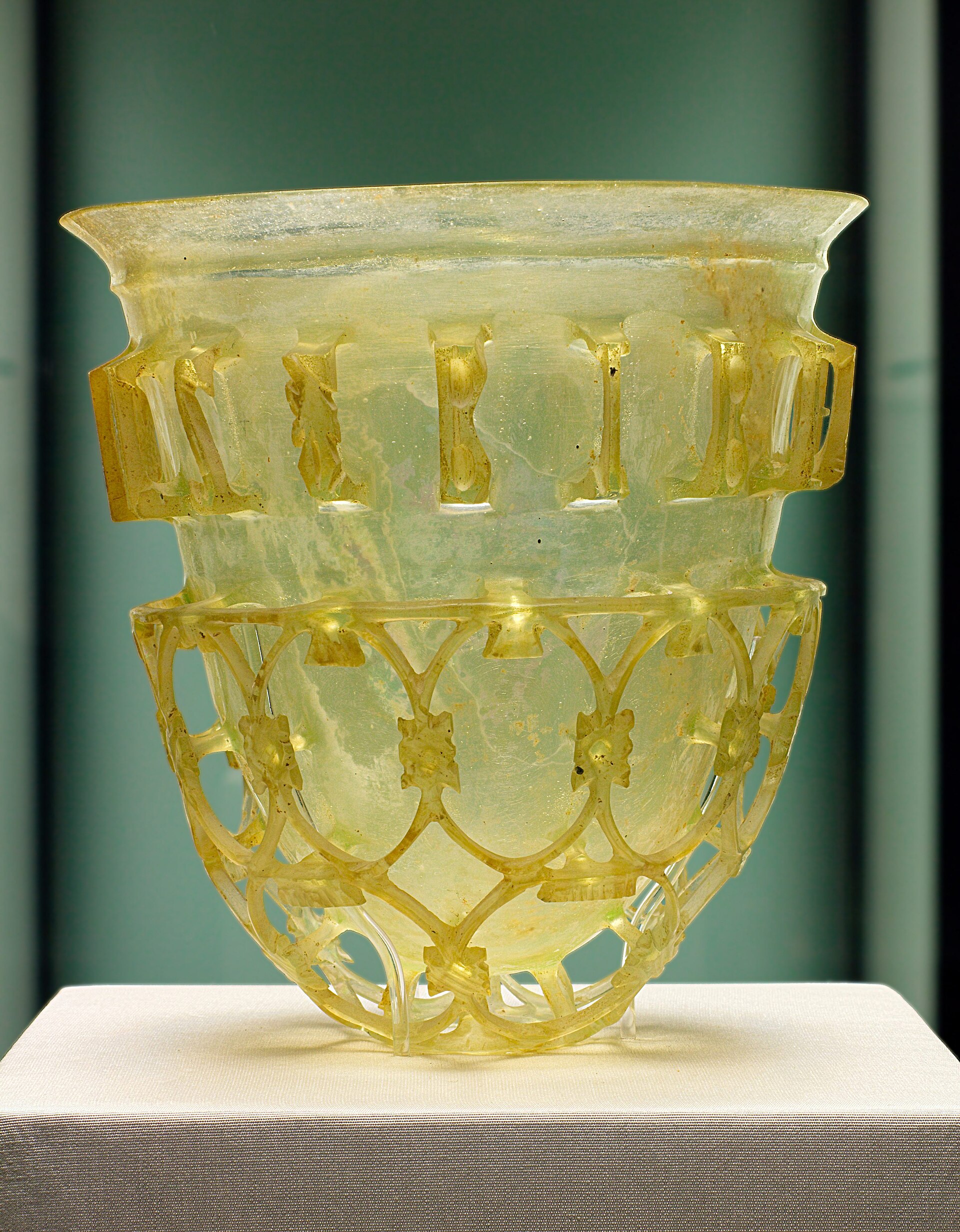
Roman cage cup 4th century CE
The Emergence of Christianity and Its Impact on Art
The rise of Christianity in the later Roman Empire marked a profound cultural and artistic transformation. Initially persecuted, Christians practiced their faith in secret, creating art in catacombs and small meeting spaces. Early Christian art was symbolic, focusing on themes of salvation, resurrection, and divine protection. Symbols like the fish, the anchor, and the chi-rho represented faith without overt references to Christ, ensuring discretion in hostile times.
As Christianity gained acceptance, particularly after Emperor Constantine’s Edict of Milan in 313 CE, Christian art and architecture flourished. Constantine’s reign saw the construction of monumental churches like the Old St. Peter’s Basilica in Rome, marking the transition from Roman temples to Christian sacred spaces. The basilica form, originally used for civic purposes, was adapted to accommodate large congregations, emphasizing communal worship.
Mosaics became a prominent feature of Christian art, adorning church walls and ceilings with depictions of Christ, saints, and biblical narratives. The apse mosaics in basilicas like San Vitale in Ravenna exemplify this shift, combining Roman artistic techniques with a new spiritual focus. The use of gold backgrounds and ethereal imagery signified the heavenly realm, diverging from the realism of earlier Roman art.
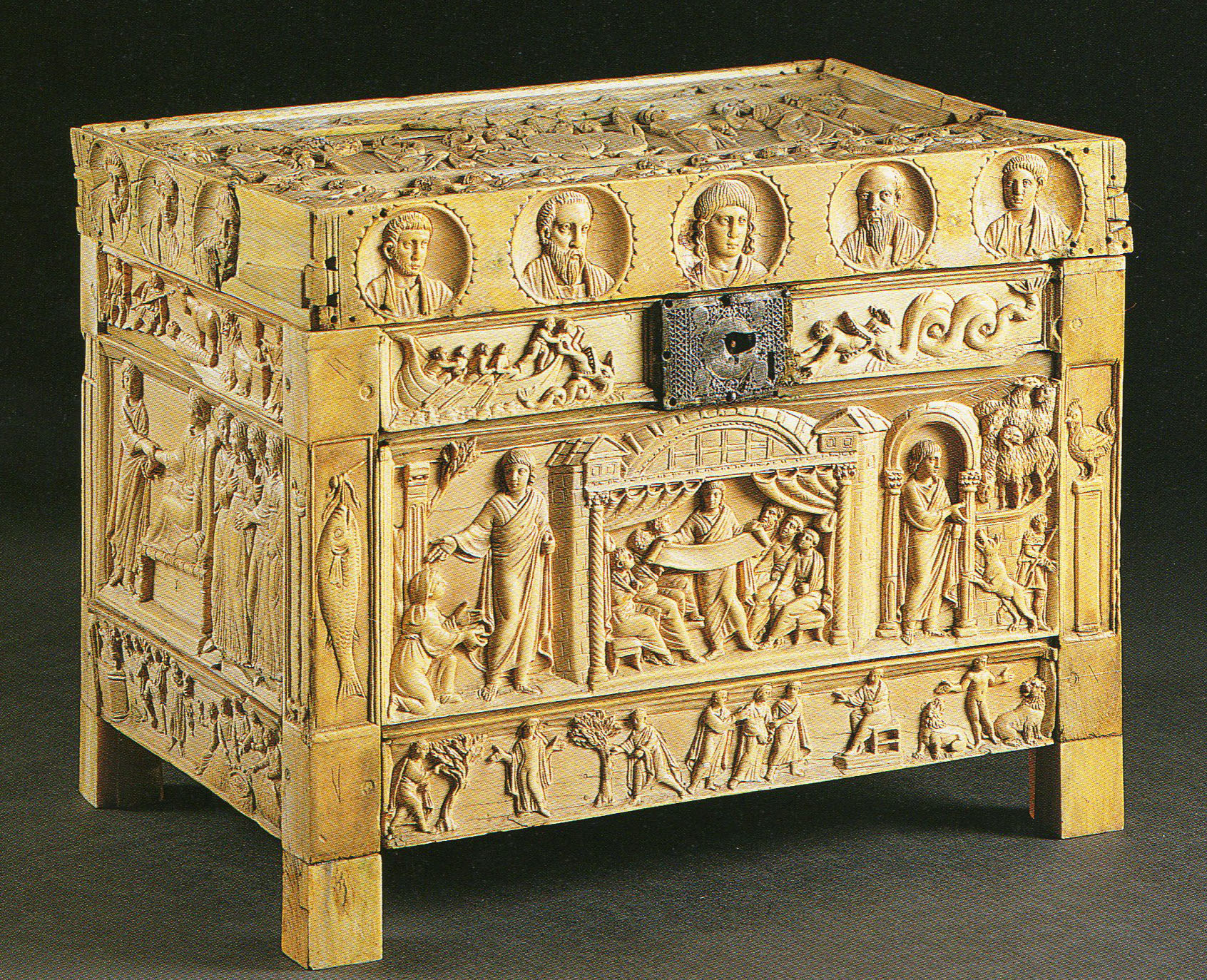
The Post-Roman Period: Legacy and Influence
With the fall of the Western Roman Empire in 476 CE, Roman art and culture did not disappear; instead, they evolved. The Byzantine Empire, centered in Constantinople, preserved and transformed Roman traditions, particularly in religious art. Iconography, mosaics, and monumental architecture, such as the Hagia Sophia, reflected the continuation of Roman artistic principles infused with Eastern influences.
In Western Europe, the legacy of Roman art and architecture persisted through the Middle Ages. Roman roads and aqueducts remained vital for infrastructure, while Romanesque and Gothic architecture drew inspiration from Roman engineering. The legal and administrative systems of medieval Europe also bore the imprint of Roman governance, demonstrating the enduring influence of Roman culture.
Global Expansion of Roman Culture
Roman culture, transmitted through conquest, trade, and migration, laid the foundation for Western civilization. The Latin language evolved into the Romance languages, while Roman legal principles influenced the development of modern legal systems. The Renaissance, beginning in the 14th century, saw a revival of Roman ideals, as artists and thinkers looked to the classical past for inspiration.
The spread of Christianity further extended Rome’s cultural legacy. As the dominant religion of Europe and later the Americas, Christianity carried with it the artistic and architectural traditions of Rome. Churches, cathedrals, and Christian iconography around the world trace their roots to Roman innovations.
Conclusion: The Eternal Influence of Rome
Ancient Rome’s art, culture, and architecture were more than expressions of an empire—they were tools of unity, identity, and influence. Through its mastery of engineering, its adaptation of earlier artistic traditions, and its embrace of new religious paradigms, Rome shaped the cultural landscape of the ancient world and beyond.
The legacy of Rome lives on in the cities we inhabit, the legal systems we follow, and the art and architecture we admire. Its ability to assimilate and innovate ensured that Roman culture would not only endure but also become a cornerstone of global civilization.
Middle Ages
During the Middle Ages and the Renaissance, design evolved from being a craft serving religious and aristocratic needs to an increasingly artistic and intellectual pursuit. This period saw a profound transformation in techniques, materials, and aesthetic values, reflecting shifts in societal structures and cultural priorities.
In the Middle Ages, design was deeply tied to religion and served as a medium for spiritual expression and devotion. Goldsmithing, weaving, and manuscript illumination were among the most significant crafts. Goldsmiths created intricate reliquaries and chalices, showcasing their mastery over precious metals and gemstones. These objects were not only tools for worship but also symbols of power and wealth. Textiles, such as tapestries and woven fabrics, were equally important, often used to decorate castles and cathedrals, with elaborate patterns depicting biblical stories or heraldic symbols. The creation of illuminated manuscripts represented another pinnacle of medieval design, blending intricate calligraphy, vibrant pigments, and gold leaf into works of art that conveyed both spiritual and educational content.
Romanesque Style: The Design and Applied Arts of the Early Middle Ages
The Romanesque style, dominant in Europe from the 10th to the 12th centuries, marked a significant transformation in architecture and the applied arts. Emerging in the aftermath of the fall of the Roman Empire and during a time of political and social upheaval, it represented a fusion of Roman architectural influences, early Christian symbolism, and regional craftsmanship. Romanesque art was primarily functional, often created with the practical needs of churches, monasteries, and communities in mind, while also deeply symbolic and spiritual.

Romanesque architecture is defined by its massive, sturdy structures, meant to provide stability and protection in a time of uncertainty. Churches and monasteries, as the most common buildings of the period, were designed to embody the power of the church and its teachings. The use of rounded arches, barrel vaults, and thick stone walls gave these structures a fortress-like quality. These features not only contributed to the buildings’ durability but also created vast, impressive interiors suitable for religious ceremonies. Small windows with minimal decoration allowed for only limited natural light, creating a mystical, otherworldly atmosphere inside the buildings.
Architecturally, the Romanesque style emphasized a sense of verticality and monumentalism. Towers and spires often adorned churches, symbolizing a connection between the earthly realm and the divine. These towering elements drew the eyes upward, guiding worshippers toward the heavens. Decorative elements were typically carved into doorways, capitals, and columns, with biblical scenes and figures from Christian doctrine used to convey religious teachings to a largely illiterate population. While ornamentation was used sparingly, it served both an aesthetic and an educational function, making divine stories accessible to the masses.
In the applied arts, Romanesque craftsmanship flourished across a range of media. Sculpture became a dominant form, especially in churches, where stone reliefs and figures told religious stories and conveyed theological lessons. These works were often deeply integrated with the architecture, serving as both ornamental decoration and instructive symbols. The art was designed to be practical and easy to understand, using clear and direct imagery that could be interpreted by all who encountered it.
Metalwork, particularly in the form of liturgical objects, also saw great advancement. Chalices, crosses, and other religious items were crafted with intricate designs, often incorporating enamel, precious stones, and gilding. These objects were not only tools for worship but also artistic expressions of piety and devotion, blending practicality with beauty.
Romanesque furniture and everyday items followed a similar approach, emphasizing durability and functionality. Carved wooden chests, tables, and altarpieces were decorated with religious symbols and scenes. These objects, though primarily utilitarian, also played a role in the expression of religious devotion, with the sacred and the practical often intertwined.
Despite the widespread use of these artistic forms for religious purposes, the Romanesque period also saw the emergence of a more secular use of design in the form of tapestries and illuminated manuscripts. The creation of these works was often associated with monasteries, where skilled artisans would create richly detailed works that illustrated both religious narratives and everyday life.
The Romanesque style left a profound influence on European design, and its characteristics can still be seen in later architectural movements. The style’s emphasis on structure, stability, and functionality influenced the development of the Gothic style in the following centuries, as Gothic architects took inspiration from Romanesque engineering and sought to expand upon its forms.
Gothic Style: The Evolution of Architecture and the Applied Arts in the High and Late Middle Ages
The Gothic style, which dominated European art and architecture from the 12th to the 16th centuries, represents one of the most distinctive and influential periods in the history of architecture and the applied arts. It evolved from the Romanesque style and pushed the boundaries of artistic expression, emphasizing verticality, light, and intricate decoration. This period saw remarkable innovation, especially in architecture, which had a lasting impact not only on the construction of churches and cathedrals but also on the decorative arts and everyday objects.
Gothic architecture is best known for its soaring, majestic structures, which were achieved through architectural innovations such as pointed arches, ribbed vaults, and flying buttresses. These techniques allowed buildings to reach unprecedented heights and incorporate large windows, transforming church interiors with the abundant light streaming through stained glass windows. The integration of these architectural elements gave rise to open, airy spaces that had a spiritual significance, symbolizing the divine presence within the sacred space.
The main feature of Gothic architecture is its focus on verticality. Buildings were designed to draw the eye upward, with spires and towers reaching toward the heavens. The pointed arches enabled architects to create higher ceilings, while the ribbed vaults distributed weight more efficiently, allowing for thinner walls and larger openings. The flying buttresses, which supported the walls from the outside, were a breakthrough that made it possible to design churches with large, expansive windows. The architecture thus not only created a monumental aesthetic but also reinforced the idea of the church as a connection between earth and heaven.
Gothic cathedrals and churches were often lavishly decorated, with facades, doorways, and columns adorned with intricate carvings depicting biblical scenes, saints, and religious symbols. These sculptures served both as decoration and as a means of communicating religious teachings to a largely illiterate populace. The visual narrative conveyed through these carvings made religious stories accessible to all who entered the church, reinforcing the message of the Christian faith.
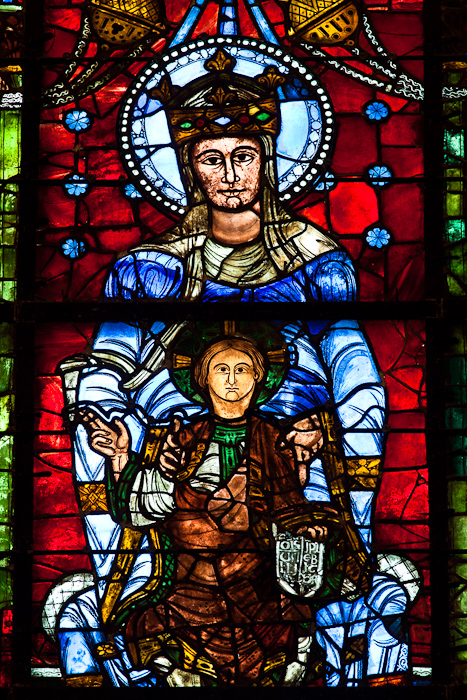
Stained glass became one of the most iconic features of Gothic churches. These windows, often depicting scenes from the Bible, not only served an aesthetic function but also had symbolic meaning. The light filtering through the colored glass created a mystical atmosphere inside the church, emphasizing the presence of the divine. The windows were also functional, as they allowed natural light into the dark interiors of the stone buildings, while the vivid colors added an emotional and spiritual depth to the space.
In the applied arts, Gothic artists developed new techniques and materials to create objects that were both functional and beautiful. Sculpture continued to be a prominent medium, with an emphasis on realism and naturalism. Figures of saints, angels, and biblical characters were rendered with more emotional expressiveness than in the earlier periods, reflecting a growing interest in humanism and the individual. These sculptures were often integrated into the architecture of cathedrals, where they could be seen by worshippers and visitors alike.
Illuminated manuscripts, another major form of applied art during the Gothic period, were created with intricate borders, miniatures, and vibrant colors. These manuscripts, often religious in nature, were decorated with fine details, including gold leaf and vibrant pigments. The highly skilled artisans who produced these works created not only functional texts but also masterpieces of decoration, making each manuscript a unique work of art.
In addition to manuscripts, metalwork flourished during the Gothic period. Liturgical items such as chalices, crosses, and altarpieces were crafted with meticulous attention to detail, incorporating elaborate designs and precious materials like gold, silver, and enamel. These objects, though primarily functional, were also intended to enhance the experience of worship, with their beauty and craftsmanship reflecting the glory of God.
Furniture from the Gothic period was less ornate than that found in later periods but still showed a marked increase in craftsmanship and decoration. Wooden altarpieces, chests, and other items were often intricately carved with religious motifs, providing both function and aesthetic value. These pieces were designed to complement the grand architecture and decoration of the churches, creating an atmosphere that was both practical and spiritually uplifting.
The Gothic period also saw a rise in the production of tapestries, which were woven with detailed religious scenes, historical events, and allegorical figures. These tapestries adorned the walls of churches, homes, and castles, and their intricate designs often served to convey moral lessons or display the wealth and status of their owners.
As the Gothic period drew to a close in the 15th and early 16th centuries, the style began to be overtaken by the Renaissance, which sought to return to the classical ideals of proportion and harmony. However, the legacy of the Gothic period continued to influence architectural and artistic developments long after its decline. The neogothic revival of the 19th century, for example, brought elements of Gothic style back into fashion, particularly in church and cathedral design.
In conclusion, the Gothic period was marked by a profound transformation in architecture and the applied arts. It represented a merging of innovation and tradition, with architects and artists pushing the boundaries of what was possible while staying grounded in religious and symbolic meaning. The focus on light, verticality, and intricate decoration gave Gothic structures their timeless beauty, while the detailed craftsmanship in applied arts, such as sculpture, stained glass, and metalwork, elevated everyday objects into works of spiritual and artistic significance. The Gothic style’s enduring legacy can be seen not only in the architecture and applied arts of the period but also in its influence on later artistic movements and the continued reverence for the spiritual and symbolic value of design.
Renaissance Style: The Revival of Classical Ideals and the Evolution of Art and Architecture
The Renaissance, which spanned roughly from the 14th to the 17th century, marked a pivotal moment in European history, characterized by a profound rebirth of interest in classical antiquity. This period, bridging the Medieval and Early Modern eras, was defined by a renewed focus on humanism, scientific discovery, and the revival of ancient Greek and Roman ideals. The Renaissance style, which developed in Italy and spread across Europe, revolutionized architecture, painting, sculpture, and applied arts, establishing new standards for form, proportion, and decoration.
Renaissance architecture sought to revive the classical principles of symmetry, proportion, and the use of columns and arches. Architects such as Filippo Brunelleschi, Leon Battista Alberti, and Michelangelo reintroduced these elements, which had been lost during the Middle Ages, into the design of churches, palaces, and public buildings. The focus on harmony and balance in design was influenced by the study of classical Roman architecture and the writings of Vitruvius, an ancient Roman architect.
A hallmark of Renaissance architecture was the use of the dome, most famously exemplified by Brunelleschi’s dome on the Florence Cathedral. This architectural innovation showcased a mastery of geometry and engineering, marking a shift from the heavy, fortress-like structures of the Gothic period to more open and expansive spaces. The dome, along with the use of arches and columns, was not only a practical solution to architectural challenges but also symbolized the Renaissance ideal of human achievement and intellectual progress.
Alongside this return to classical forms, Renaissance artists developed new techniques that would shape the future of art. The use of perspective was one of the most important innovations, allowing artists to create a sense of depth and realism in their works. Artists like Leonardo da Vinci, Raphael, and Michelangelo perfected the use of linear perspective, creating scenes that seemed to recede into the background, bringing a three-dimensional quality to paintings. The use of light and shadow, or chiaroscuro, also became a key technique, adding depth and volume to the human figure.
The human figure itself became central to Renaissance art, as artists sought to capture the beauty and complexity of the human body. Influenced by classical sculpture, Renaissance artists studied anatomy and proportion to render figures more realistically. The works of Michelangelo, particularly his sculptures of David and the Pietà, exemplify this mastery of the human form, showcasing not only technical skill but also an emotional depth that was a hallmark of Renaissance art.
In sculpture, the Renaissance saw a revival of the classical tradition of free-standing, life-sized statues, often depicting gods, heroes, and biblical figures. The emphasis on naturalism was evident in the works of artists like Donatello, whose David became one of the first large-scale, freestanding sculptures since antiquity. The human figure was no longer stylized or symbolic, as it had often been in the Medieval period, but was depicted with a realistic sense of weight, movement, and emotion.
Renaissance art also had a profound impact on the applied arts, where the principles of beauty, proportion, and classical inspiration were incorporated into everyday objects. Decorative arts, such as furniture, textiles, and metalwork, followed the Renaissance ideal of harmony and balance. Furniture design during this period became more refined, with intricate carvings, decorative motifs, and a focus on both form and function.
In addition to architectural and artistic advancements, the Renaissance also saw a flourishing of decorative arts like tapestry weaving, pottery, and metalwork. The use of classical themes and motifs—such as mythological scenes, animals, and floral patterns—became widespread in these applied arts. Renaissance tapestries, often commissioned by the wealthy, were used not only as decoration but also as a form of storytelling, illustrating scenes from classical mythology or religious narratives. These tapestries were meticulously designed and woven, showcasing the skill of artisans who worked with luxurious materials such as silk and gold thread.
Metalwork during the Renaissance also saw significant developments, with the production of intricate silverware, jewelry, and liturgical objects. These items, which were often highly decorated, combined functionality with beauty, reflecting the Renaissance belief that everyday objects should embody both practical and aesthetic qualities.
In furniture design, the Renaissance saw a shift from the more simple, utilitarian pieces of the Medieval period to more elaborate and ornamented furnishings. Chairs, tables, and cabinets were crafted with intricate wood carving, often featuring biblical or classical themes. The emphasis on proportion and symmetry that defined Renaissance architecture also influenced the design of these everyday items, making them not only functional but aesthetically pleasing as well.
The Renaissance’s influence on applied arts extended beyond Italy. As the Renaissance spread across Europe, it impacted furniture and decorative arts in places like France, England, and the Netherlands. In Northern Europe, for example, the Flemish style of painting and the production of intricately detailed objects like clocks, scientific instruments, and books showcased the period’s focus on realism and the representation of the human experience in everyday life.
With the rise of humanism, the Renaissance also saw the emergence of the artist as a highly respected individual. Artists and craftsmen gained recognition for their creativity and skill, and their work became an integral part of civic life. Patrons, often wealthy merchants or members of the church, sought to commission works of art and architecture that would enhance their prestige and demonstrate their cultural refinement. This new status of the artist marked a shift from the medieval period, where craftsmen were often seen as mere laborers.
As the Renaissance continued, its influence spread to the development of new forms of artistic expression, leading to the Baroque period and beyond. However, the core ideals of the Renaissance—an emphasis on classical forms, humanism, and the unity of beauty and function—would continue to shape Western art and design for centuries to come.
In conclusion, the Renaissance was a transformative period in the history of art and architecture, marking the revival of classical ideals and the development of new techniques that brought realism, beauty, and harmony to both public and private spaces. The Renaissance’s impact on the applied arts, from furniture and metalwork to tapestries and illuminated manuscripts, demonstrated the period’s belief that beauty and functionality could coexist in everyday life. The legacy of the Renaissance continues to influence contemporary design, with its emphasis on proportion, balance, and the integration of art into the fabric of daily existence.
Baroque Style: The Expression of Emotion and Drama in Architecture and the Applied Arts
The Baroque period, which flourished from the late 16th century to the early 18th century, was a time of dramatic change in the arts, architecture, and applied arts across Europe. Characterized by grandeur, movement, and emotional intensity, Baroque art and design broke away from the restrained harmony of the Renaissance and embraced a more dynamic and expressive form. The Baroque style was closely linked to the Counter-Reformation, a Catholic movement that sought to reassert the power and influence of the Church in the face of the Protestant Reformation. It is this religious context that helped to shape the Baroque style, which became a symbol of both the Catholic Church’s authority and the aristocracy’s wealth and power.
In architecture, the Baroque style was marked by bold, sweeping forms, large-scale decorations, and the use of light and shadow to create drama. Architects like Gian Lorenzo Bernini, Francesco Borromini, and Peter Paul Rubens worked to create dynamic, theatrical spaces. Baroque buildings often featured undulating facades, expansive domes, and intricate ornamentation, which were designed to evoke awe and astonishment. The manipulation of space in Baroque architecture was intended to elicit a visceral, emotional response from the viewer. Churches and palaces were designed not only as functional spaces but as grandiose representations of divine and earthly power.
One of the defining characteristics of Baroque architecture was the emphasis on movement and flow. Unlike the Renaissance style, which focused on symmetry and balance, Baroque architecture sought to create a sense of continuous movement. This was achieved through curving lines, dynamic facades, and dramatic contrasts of light and shadow. Baroque buildings were designed to envelop and engage the viewer, drawing them into the space and emphasizing the power and significance of the environment. St. Peter’s Basilica in Vatican City, redesigned by Bernini, exemplifies this approach, with its grand colonnade extending outward to embrace visitors, symbolizing the welcoming arms of the Church.
Another defining element of Baroque architecture was the use of light. Baroque architects used natural and artificial light in innovative ways, such as through large windows and the strategic placement of light sources, to create dramatic effects. The interplay of light and shadow was not just a technical achievement but also a symbolic one, representing divine illumination and the mysteries of faith. In churches, light was used to highlight altars, statues, and religious scenes, drawing the eye to these focal points and enhancing the spiritual experience.
Baroque sculpture, like architecture, was characterized by movement and emotional expression. Artists such as Gian Lorenzo Bernini and Alessandro Algardi created dynamic sculptures that captured dramatic moments in history, religion, and mythology. Bernini’s Ecstasy of Saint Teresa, for example, exemplifies the Baroque tendency to depict heightened emotion, with the saint’s body seemingly suspended in ecstasy. The dramatic, flowing forms of Baroque sculpture were designed to engage the viewer, creating a sense of movement and life within the work.
In the applied arts, the Baroque style brought a heightened sense of luxury and ornamentation. Furniture, textiles, and metalwork were crafted with elaborate designs, often incorporating intricate carvings, gilding, and luxurious materials like velvet and silk. The furniture of this period was often grand and imposing, with heavy, curvaceous forms and intricate detailing that reflected the wealth and power of the aristocracy. Cabinets, chairs, and tables were not merely functional but were designed to impress and convey a sense of opulence.
Baroque furniture was often adorned with motifs such as acanthus leaves, scrolls, and floral patterns, which were heavily influenced by the classical tradition but executed in a more exaggerated and dramatic manner. The use of gilding became widespread, with furniture pieces often covered in gold leaf or painted in bright, contrasting colors. This created a sense of richness and splendor, enhancing the overall dramatic effect of the interior.
In metalwork, Baroque artists and craftsmen produced ornate liturgical objects, candlesticks, and chalices that were both functional and decorative. These items were often made of silver or gold and were intricately designed with religious symbols, floral motifs, and elaborate patterns. The Baroque preference for richness and drama was evident in the use of these objects in religious and ceremonial contexts, where they served to enhance the sense of reverence and grandeur.
Baroque textiles, particularly tapestries, also played a major role in decorating churches, palaces, and private homes. Tapestries during this period were often commissioned by the wealthy and religious institutions to display their power and taste. These pieces were typically woven with rich colors, gold thread, and complex patterns, illustrating scenes from mythology, religion, or allegory. The scale and detail of Baroque tapestries contributed to the overall sense of theatricality, with large, dramatic compositions that were intended to captivate and awe the viewer.
Baroque painting was equally expressive, characterized by dramatic contrasts of light and shadow, intense color, and dynamic compositions. Artists like Caravaggio, Peter Paul Rubens, and Rembrandt brought a new level of realism and emotion to their works. The use of chiaroscuro (the stark contrast between light and dark) was a hallmark of Baroque painting, used to heighten the emotional impact of the scene. The figures in Baroque paintings were often depicted in dramatic poses, captured at the height of action or emotion. This emphasis on emotion and movement helped to create a sense of immediacy and involvement in the viewer.
Caravaggio’s paintings, such as The Calling of Saint Matthew, exemplify the Baroque approach to naturalism and drama, using strong contrasts of light and dark to create an intense, almost theatrical effect. Rubens, on the other hand, was known for his vibrant color and exuberant compositions, depicting scenes of mythological or religious subjects with dynamic movement and emotional intensity.
In conclusion, the Baroque period was a time of dramatic artistic expression, marked by grandeur, emotion, and movement in architecture, sculpture, painting, and applied arts. The style’s emphasis on light, dynamic forms, and elaborate decoration was driven by the desire to evoke awe, communicate religious themes, and assert the power and wealth of the Church and aristocracy. Baroque art and design were deeply intertwined with the political and religious context of the time, and its legacy continues to influence the arts today. The Baroque style transformed the visual language of the European arts, creating an enduring impact that would later give way to the Neoclassical movement in the 18th century.
Rococo Style: Elegance and Ornamentation in a New Age of Art and Design
The Rococo style, which emerged in France during the early 18th century and spread throughout Europe, marked a shift from the grandeur and drama of the Baroque to a more playful, light-hearted aesthetic. While the Baroque had focused on power, emotion, and grandeur, Rococo was characterized by an emphasis on elegance, refinement, and intricate ornamentation. It reflected the tastes of the aristocracy, particularly in the wake of the lavish court life at the French court of Louis XV.
Rococo architecture and interior design were marked by asymmetry, lightness, and a focus on delicate, often whimsical decoration. In contrast to the Baroque’s grandiose, dramatic spaces, Rococo interiors were more intimate, with a focus on comfort and decorative sophistication. Curving, fluid lines replaced the heavy forms of Baroque architecture, and the use of pale pastel colors, gilding, and ornate, often playful motifs was prevalent.
The French designer François de Cuvilliés, and architects such as Germain Boffrand and Jean-Claude-Nicolas Forestier, championed this style, particularly in the design of palaces and salons. Rococo interiors were often marked by intricate moldings, mirrors, and frescoes that played with the concept of light and space. The furniture was lighter and more delicate, often adorned with floral motifs, scrolls, and intricate carvings. Cabinets, chairs, and tables were smaller and more elegant than their Baroque counterparts, with an emphasis on comfort and refinement.
In furniture design, the Rococo style was particularly noted for its emphasis on ornate carving and luxurious materials. Woodwork was often gilded, and furniture items featured detailed floral and shell motifs. Chairs, sofas, and mirrors had fluid, organic shapes, with curves replacing the sharp angles of earlier periods. Rococo furniture was designed to be visually stunning and tactilely inviting, with cushions and upholstery adding to its comfort.
Rococo art was similarly characterized by soft, curving lines and pastel colors, with themes often derived from love, mythology, and the pleasures of life. Paintings and sculptures became more intimate and focused on human emotions, often depicting idyllic scenes of pastoral life, lovers, and whimsical allegories. Artists like Jean-Honoré Fragonard, Antoine Watteau, and François Boucher created works that embodied the Rococo aesthetic of grace, refinement, and sensuality. These works reflected the growing sense of individualism and the enjoyment of pleasure and leisure, ideals which were promoted by the courtly life at Versailles.
Rococo also saw a rise in decorative arts, particularly porcelain and silverware. Porcelain manufacturers, such as those in Meissen, France, and Sèvres, produced delicate and intricately designed objects, ranging from figurines to dinnerware. These items were often decorated with scenes from mythology, nature, or courtly life, and their delicacy and refinement made them highly sought after by the elite.
While Rococo was celebrated for its elegance and beauty, it began to fall out of favor toward the end of the 18th century, as the political climate shifted. The French Revolution and the rise of Neoclassicism led to a rejection of the Rococo’s lavishness and its associations with the aristocracy.
Neoclassicism: A Return to Order, Simplicity, and Classical Inspiration
The Neoclassical style emerged in the mid-18th century as a reaction against the exuberance and ornamentation of the Rococo. Influenced by the rediscovery of ancient Greek and Roman ruins, as well as the intellectual movement of the Enlightenment, Neoclassicism sought a return to the ideals of simplicity, order, and rationality. It was characterized by a renewed interest in the classical arts, with a focus on symmetry, clean lines, and the use of ancient motifs.
In architecture, Neoclassicism was marked by a return to the grandeur and simplicity of classical forms. Architects such as Robert Adam, Étienne-Louis Boullée, and Jacques-Germain Soufflot drew inspiration from the temples of ancient Greece and Rome, incorporating columns, pediments, and colonnades into their designs. Buildings were often characterized by clean, straight lines, minimal decoration, and a sense of order and balance. The use of white or light-colored stone, as well as the reintroduction of the dome and the portico, were key elements of Neoclassical architecture.
The Panthéon in Paris, designed by Soufflot, and the United States Capitol in Washington, D.C., designed by James Hoban, are prime examples of Neoclassical architecture. These buildings emphasize the power and stability associated with classical antiquity, with their grand facades and symmetrical layouts. Neoclassical architecture was not just about aesthetic preference; it was also about creating structures that conveyed the ideals of rationality, democracy, and civic virtue that were central to the Enlightenment.
Neoclassical art also embraced classical themes and subjects, with artists returning to Greek and Roman mythology, history, and philosophy for inspiration. The works of artists like Jacques-Louis David and Jean-Auguste-Dominique Ingres exemplified this shift. David’s paintings, such as The Oath of the Horatii and The Death of Socrates, depicted heroic scenes from ancient history and mythology, with a focus on moral integrity, virtue, and stoic emotion. Neoclassical art sought to capture the nobility and moral clarity of ancient figures, rejecting the emotional excesses of the Baroque and Rococo styles.
In sculpture, Neoclassicism was marked by a return to idealized human forms and a focus on restraint and balance. The works of Antonio Canova, such as Psyche Revived by Cupid’s Kiss and The Three Graces, exemplify the Neoclassical emphasis on smooth, flowing lines and the beauty of the human body. The sculptures were often based on classical models, with an emphasis on proportion, symmetry, and grace.
In the applied arts, Neoclassical furniture and decorative arts also returned to simplicity and symmetry. Furniture designs favored straight lines and minimal ornamentation, with decorative motifs inspired by ancient Greece and Rome, such as laurel wreaths, urns, and classical figures. Materials were often of high quality, but the focus was on refinement rather than excessive decoration. Furniture was made to be functional and elegant, embodying the rationality and order of the age.
Neoclassical porcelain, silverware, and textiles also drew inspiration from classical forms, with motifs such as columns, medallions, and scenes from mythology and history. The Neoclassical aesthetic extended to everyday objects, with an emphasis on balance and proportion. These items were designed to be both practical and aesthetically pleasing, in line with the Enlightenment belief in the importance of beauty and function being harmoniously combined.
The Neoclassical style was not only a return to the past but also a reflection of the political and philosophical ideals of the time. It was closely tied to the ideas of the Enlightenment, which emphasized reason, democracy, and the importance of virtue. The architecture and design of this period reflected these values, with an emphasis on order, clarity, and moral purpose. The Neoclassical movement influenced art and design throughout the 18th and 19th centuries and laid the foundation for later styles, such as the Empire style and the broader resurgence of classical ideals in the 19th century.
In conclusion, both Rococo and Neoclassicism were responses to the cultural and political climates of their time, and each had a lasting impact on the development of European art and design. Rococo emphasized elegance, luxury, and intricate ornamentation, while Neoclassicism sought a return to the simplicity, order, and rationality of classical antiquity. The influence of these two styles can still be seen in modern architecture and design, where their respective qualities of elegance, grandeur, simplicity, and balance continue to shape aesthetic sensibilities today.
The Industrial Revolution and the Beginnings of Modern Design
The Industrial Revolution, which began in the late 18th century and continued into the 19th century, marked a profound transformation in technology, society, and the economy. This period saw the shift from agrarian economies to industrialized societies, which led to major advancements in manufacturing, transportation, and communication. The effects of the Industrial Revolution were far-reaching, and one of the most significant changes was the emergence of modern design, which sought to address the new challenges and opportunities presented by industrialization.
Prior to the Industrial Revolution, most goods were handmade by artisans or craftsmen, using traditional techniques passed down through generations. This made objects expensive and often unique, with designs rooted in history and culture. The rise of industrial production, however, meant that products could be mass-produced, leading to a dramatic decrease in the cost of goods and making them accessible to a broader segment of society. Factories, steam engines, and assembly lines began to replace handcraftsmanship, and products were increasingly standardized to meet the demands of mass production.
The need for design became more evident as industries grew. The sheer volume of goods being produced led to an overwhelming amount of poorly made, unattractive products. This gave rise to the idea of “design” as a discipline, with the aim of improving both the aesthetics and functionality of mass-produced objects. Industrialization, while increasing efficiency and accessibility, also raised concerns about the quality of manufactured goods and the lack of beauty in everyday items. In this context, design began to take on a new role—ensuring that products were not only functional but also well-crafted and visually appealing.
One of the key figures in this early phase of industrial design was Josiah Wedgwood, an English potter and entrepreneur who revolutionized the production of ceramics. Wedgwood introduced innovative methods of mass production while maintaining high standards of design and craftsmanship. His designs, such as the iconic “Wedgwood Jasperware,” combined classical influences with new manufacturing techniques, showing that industrial production did not necessarily have to sacrifice beauty or quality.
The Arts and Crafts movement, which began in Britain in the late 19th century, was another important reaction to the negative aspects of industrialization. Led by figures such as William Morris, the Arts and Crafts movement sought to revive traditional craftsmanship and emphasize the value of handwork in design. Morris and his followers believed that the mass production of low-quality goods led to a loss of beauty and meaning in everyday life. They advocated for a return to handcrafted objects, often with a focus on natural materials and intricate decorative patterns. Although the Arts and Crafts movement was partly a reaction to the industrialization of design, it also laid the foundation for the later development of modern design by introducing the idea of combining aesthetics with functionality.
Rationalization of Production
The concept of rationalization in production emerged in the 19th century as a response to the growing need for efficiency in manufacturing processes. The focus was on increasing output while minimizing costs through standardization, specialization, and the use of new technologies. Two key examples of this shift in production practices are Michael Thonet’s innovations in bentwood furniture and the development of armament factories in the United States. Both examples reflect how rationalized production methods were applied to different industries, each with its own goals but ultimately advancing the concept of mass production and standardization.
Michael Thonet and Bentwood Furniture
Michael Thonet, a German-Austrian furniture designer and manufacturer, is often credited with revolutionizing the furniture industry through his innovative use of bentwood. Thonet’s approach to furniture design and production was deeply rooted in rationalization principles. He was one of the first to apply industrial-scale production methods to furniture, allowing for the mass production of high-quality, standardized products.
Thonet’s process of bending wood was a groundbreaking development that involved steam-bending techniques, which made it possible to create curved, ergonomically designed furniture with a lightweight and sturdy construction. By using steam to soften the wood, Thonet could bend it into complex shapes without the need for extensive joinery or additional parts. This process drastically reduced the cost of production, as it required fewer materials and less labor.
The most famous example of Thonet’s bentwood furniture is the “No. 14” chair, introduced in 1859. This chair became a symbol of rationalized production because it could be mass-produced with standardized parts. The chair’s design was simple, functional, and aesthetically pleasing, while its construction was efficient enough to be produced in large quantities. Thonet’s method allowed for high-volume manufacturing without sacrificing quality, marking a significant shift from traditional handcraftsmanship to industrialized processes in furniture production.
Thonet’s bentwood furniture also had a significant impact on design in that it demonstrated the potential for combining industrial methods with aesthetic principles. By applying rationalized production techniques, Thonet created furniture that was both affordable and elegant, making it accessible to a broader public. The use of standardization in the production of bentwood furniture reflected the wider trend of rationalization that was emerging across various industries during the Industrial Revolution.
Armament Factories in the United States
In parallel with advancements in the furniture industry, the United States saw significant developments in the rationalization of production during the same period, particularly in the armament industry. The establishment of large-scale armament factories, especially during the American Civil War and later during World War I, required the adoption of standardized production techniques to meet the massive demand for weapons and ammunition.
The key figure in this transformation was Eli Whitney, an inventor and manufacturer who is best known for popularizing the concept of interchangeable parts. In the early 19th century, Whitney introduced a system of mass production based on standardized parts for firearms, which allowed for the quick assembly of weapons without the need for highly skilled labor. This system of standardized components was crucial for increasing efficiency and reducing production time.
The use of interchangeable parts in the manufacturing of firearms was a revolutionary development that influenced not only the armament industry but also other sectors of manufacturing. It enabled the production of large quantities of weapons with a level of consistency and efficiency that had previously been impossible. By standardizing parts, the production process could be organized into assembly lines, where workers specialized in specific tasks, reducing the overall labor required to produce each item.
In the case of armament factories, the rationalization of production was not only about efficiency and cost reduction but also about meeting the demands of wartime economies. The production of standardized, interchangeable parts allowed for rapid repair and replacement of military equipment, which was crucial during periods of conflict. This system also made it possible to equip large numbers of soldiers with standardized weapons, ensuring uniformity and functionality across the board.
Art Nouveau: The Secessionist Movement and Its Influence on Design
Art Nouveau, also known as Secessionism in certain European contexts, was an artistic movement that emerged in the late 19th century, reaching its peak between 1890 and 1910. The movement was a reaction against the industrialization, mass production, and academic traditions of the 19th century, emphasizing a return to organic forms, craftsmanship, and artistic unity across various design disciplines. Art Nouveau sought to break away from historicist styles and bring together art, design, and architecture in a new, integrated aesthetic.
The name “Art Nouveau” (French for “new art”) reflects the desire for a fresh, modern artistic expression, distinct from the heavy ornamentation of past styles like Victorian and Rococo. The Secessionist movement, which took place in various European cities, including Vienna, Munich, and Prague, echoed this desire for a break from the constraints of traditional art. Artists and designers aimed to create a style that felt natural, inspired by the fluid lines and forms found in nature, such as flowers, plants, and flowing water.
One of the key features of Art Nouveau design was the emphasis on organic, curvilinear lines. Furniture, architecture, and decorative objects often featured intricate, flowing lines that resembled plant stems, vines, and floral patterns. These lines were often combined with asymmetrical designs that gave the artwork a sense of movement and life. The use of curves in Art Nouveau was a deliberate departure from the straight lines and rigid geometry of the industrial age. Designers sought to reconnect with the natural world, making art and design appear less mechanical and more fluid.
The movement also emphasized the importance of craftsmanship. While the Industrial Revolution had led to mass production, Art Nouveau advocated for a return to handcraftsmanship and the use of high-quality materials. Artisans in this period sought to create unique, beautifully crafted pieces, blending art with functionality. This idea was central to the designs of artists like Antoni Gaudí, who integrated natural forms into his architectural masterpieces, and René Lalique, who created exquisitely detailed glasswork.
Art Nouveau also championed the idea of total design or Gesamtkunstwerk—a concept where architecture, furniture, textiles, and even everyday objects were designed as a cohesive whole. This unified approach allowed for a harmonious relationship between the different elements of a space, where each object contributed to the overall aesthetic. The movement advocated for the integration of art into daily life, with the belief that beauty should be present in the things we use every day.
The movement also saw a significant development in the design of glass, ceramics, and metalwork. Artists like Louis Comfort Tiffany in the United States and Émile Gallé in France helped to revolutionize glassmaking techniques, creating decorative objects such as lamps, vases, and stained glass windows with intricate organic patterns. The decorative arts flourished with innovations in jewelry, textiles, and furniture, where flowing lines, floral motifs, and nature-inspired designs were employed.
In architecture, Art Nouveau was characterized by its decorative facades, the use of wrought iron and glass, and the integration of organic forms into building design. The work of architects like Hector Guimard in Paris and Victor Horta in Belgium exemplified this approach, with buildings that featured curving ironwork, floral motifs, and an organic, almost natural appearance. Buildings such as the Hôtel Tassel in Brussels by Horta are considered masterpieces of Art Nouveau architecture. These buildings often blended seamlessly with their surroundings, reflecting the movement’s desire to integrate art with the natural world.
One of the most famous architects of the Art Nouveau period was Antoni Gaudí, whose works in Barcelona, including the Sagrada Família and Casa Batlló, feature highly imaginative, organic forms inspired by nature. Gaudí’s buildings are marked by curving lines, irregular shapes, and the extensive use of colorful ceramic tiles, which reflect the influence of Art Nouveau’s emphasis on nature and craftsmanship.
Despite its rich contributions to design, Art Nouveau was a relatively short-lived movement. By the onset of World War I, the movement began to lose favor as new styles such as Art Deco and Modernism emerged. These newer styles sought to embrace the changing realities of the 20th century, emphasizing industrial efficiency, clean lines, and a break from ornamentation. However, Art Nouveau’s influence can still be seen today in design, particularly in the emphasis on craftsmanship, organic forms, and the integration of art into daily life.
Legacy of Art Nouveau in Modern Design
While Art Nouveau was short-lived, its impact on the development of modern design was significant. The movement’s focus on aesthetic beauty and the integration of art and design into everyday life laid the groundwork for the 20th-century design movements that followed. Modernism, which emerged after World War I, rejected the ornate styles of the 19th century but retained the Art Nouveau ideals of integrating beauty with functionality.
The Art Nouveau legacy can be seen in the works of later designers who emphasized simplicity and elegance in form while still embracing artistic expression. The movement also contributed to the development of new design materials and manufacturing techniques that allowed for more innovative and expressive forms. The decorative arts of Art Nouveau, from furniture to glassware, provided a foundation for later movements in design that sought to unite beauty and function in new ways.
In conclusion, Art Nouveau was a transformative movement that sought to integrate art and design in harmony with nature and craftsmanship. By rejecting the mass-produced, mechanical objects of the Industrial Revolution, it celebrated organic forms, creativity, and the role of design in enhancing daily life. Though it was brief, the influence of Art Nouveau can still be felt in the design world today, serving as a reminder of the power of beauty, creativity, and the fusion of art and function.
Modernism and Functionalism: The Shift in Design and Architecture
Modernism and functionalism, two closely related movements that emerged in the early 20th century, profoundly impacted design and architecture. These movements arose as a response to the rapid changes brought about by industrialization, urbanization, and technological advancements, rejecting previous ornate styles and focusing instead on simplicity, functionality, and the use of modern materials. Modernism emphasized new ways of thinking about form and function, while functionalism became a key principle in the design of objects, buildings, and entire environments.
Modernism: A New Aesthetic for a Changing World
Modernism, a broad cultural movement that spanned the arts, architecture, literature, and design, began to take shape in the early 20th century, peaking in the interwar years. It was marked by a departure from traditional forms and an embrace of abstraction, minimalism, and innovation. Artists, designers, and architects sought to create something new, inspired by technological progress and the evolving social landscape. Modernism was seen as a break from the constraints of history, and it rejected the decorative excesses of earlier periods, such as the ornate flourishes of the Victorian or Baroque styles.
One of the key features of modernist design was the use of new materials such as steel, glass, and concrete. These materials allowed for greater flexibility in form and structure, giving architects the ability to create buildings with clean lines, open spaces, and an emphasis on functionality. The industrial nature of these materials also reflected the increasing role of machinery and mass production in everyday life.
Modernism promoted the idea of “form follows function,” meaning that the design of a building, object, or space should be based on its intended purpose rather than purely decorative considerations. This principle, which was most famously championed by architect Louis Sullivan, became a cornerstone of modernist thought, influencing architecture, industrial design, and even graphic design. The goal was to create objects and buildings that were efficient, practical, and well-suited to modern life, without the embellishments and complexity of previous styles.
Art Deco: Luxury and Elegance
While modernism was concerned with simplicity and functionality, Art Deco emerged in the 1920s and 1930s as a design style that celebrated luxury, elegance, and ornamentation. Art Deco was a response to the austerity of the post-World War I era and was characterized by bold geometric patterns, rich materials like lacquer and chrome, and a blend of decorative elements that combined influences from ancient Egypt, classical Greece, and modern industrial design.
The Art Deco style found its expression in both architecture and product design, with examples like the Chrysler Building in New York City, which was celebrated for its sleek, streamlined form and the use of luxurious materials. Cartier, the famed jewelry house, also embraced the Art Deco style, creating pieces that were opulent, geometric, and modern. The elegance of Art Deco contrasted with the functional simplicity of modernism, making it a favorite style for the wealthy and elite.
Art Deco was influential not only in architecture and product design but also in fashion, graphic design, and even interior design. The style’s focus on luxury and elegance appealed to the desire for glamour and sophistication, marking it as a distinct movement within the broader modernist era. However, while Art Deco was celebrated for its beauty and craftsmanship, it also incorporated elements of mass production, as many of its designs were created using modern industrial techniques, blending craftsmanship with the new efficiencies of the age.
The Bauhaus: The Birth of Modern Design Education
One of the most significant movements in modernist design was the Bauhaus school, founded in 1919 in Weimar, Germany, by architect Walter Gropius. The Bauhaus was not only a design school but also a hub for modernist thought, where artists, designers, and architects came together to develop a unified approach to art and industrial design. The school advocated for the integration of art, craft, and technology, promoting the idea that design should be functional, accessible, and aesthetically harmonious.
Bauhaus designers rejected ornate decoration in favor of simple, geometric forms and the use of modern materials such as steel, glass, and concrete. They embraced mass production techniques, believing that good design could improve the lives of all people, not just the elite. The Bauhaus produced some of the most iconic designs of the 20th century, including furniture, textiles, and graphics, all based on principles of functionality, simplicity, and practicality.
In the 1930s, as the rise of the Nazi regime forced many intellectuals and artists to flee Germany, several key members of the Bauhaus moved to the United States. Figures such as Ludwig Mies van der Rohe, Marcel Breuer, and Josef Albers brought their modernist principles to American universities, where they became influential in shaping the future of architecture and design education. The Bauhaus legacy in the U.S. led to the establishment of new design schools, which continued to promote the principles of modernism and functionalism.
Mass Production and the Influence of Fordism
The shift towards mass production was not limited to design but was integral to the larger industrialization of society. The most prominent example of mass production was Henry Ford’s assembly line, which revolutionized the automobile industry in the early 20th century. Ford’s introduction of standardized, interchangeable parts allowed for the rapid production of vehicles at a lower cost, making cars affordable for the middle class. This method of production became a model for industries worldwide, including furniture and other consumer goods.
Fordism, which was based on the principles of standardization, specialization, and the efficient use of labor, influenced product design in profound ways. Designers began to focus on creating products that could be mass-produced using standardized parts, much like the automobiles rolling off Ford’s assembly lines. The emphasis shifted from individual craftsmanship to efficiency and cost-effectiveness, enabling the production of goods in large quantities that could be sold to a broader population.
Functionalism: Design Driven by Purpose
Functionalism, a submovement within modernism, emphasized that the design of any object or building should prioritize its practical use above all else. Functionalists rejected unnecessary ornamentation and instead focused on creating solutions that were efficient, durable, and tailored to the needs of the people who would use them. This approach was not limited to architecture but extended to all areas of design, including furniture, industrial products, and even urban planning.
Functionalism was influenced by the social and economic conditions of the time. As mass production and new manufacturing techniques became more widespread, there was a growing desire for affordable, practical designs that could be produced on a larger scale. The functionalist approach was particularly suited to this demand, as it favored designs that could be mass-produced and were easy to assemble and maintain.
In architecture, functionalism led to the creation of buildings that were highly utilitarian, with minimal decoration and a focus on the practical needs of their inhabitants. The famous modernist architect Le Corbusier was a key proponent of functionalism in architecture. His designs, such as the Villa Savoye, emphasized open floor plans, flat roofs, and the use of industrial materials like concrete and glass. These elements allowed for a more efficient use of space and materials, reducing unnecessary costs and creating buildings that were better suited to modern life.
In product design, functionalism led to the development of simple, ergonomic, and efficient objects that were designed with the user in mind. Designers like the Bauhaus school, led by figures such as Walter Gropius and Ludwig Mies van der Rohe, championed the idea that design should serve the needs of society and improve people’s lives. Bauhaus furniture, such as the famous Wassily chair by Marcel Breuer, exemplified functionalism through its use of tubular steel and minimalist design, making the chair both durable and affordable.
Streamline Moderne: Elegance in Speed and Aerodynamics
Streamline Moderne, or simply Streamline, emerged during the 1930s as a design style that celebrated the technological advancements of the era, particularly in transportation and industry. It evolved from the decorative richness of Art Deco, shifting towards a sleek and functional aesthetic inspired by aerodynamics and efficiency. Streamline designs aimed to convey speed, progress, and modernity, often reflecting the optimism of an age seeking recovery from the Great Depression.
The style was characterized by smooth, flowing lines, rounded edges, and horizontal accents that emphasized motion even in static objects. Materials such as chrome, stainless steel, and Bakelite became hallmarks of the era, representing durability and modern sophistication. Designers adopted simplified forms, focusing on the interplay between function and appearance, avoiding unnecessary ornamentation.
Streamline Moderne influenced a wide range of industries, from architecture to consumer products. In transportation, trains like the Burlington Zephyr and ocean liners like the SS Normandie showcased the style’s aerodynamic principles, blending elegance with engineering. Automobiles, such as the Chrysler Airflow, embraced teardrop shapes to reduce air resistance, though their futuristic appearance was not always commercially successful. Household items, including the Electrolux vacuum cleaner and Wurlitzer jukebox, became icons of the Streamline aesthetic, combining utility with a vision of a modern lifestyle.
Culturally, Streamline Moderne symbolized hope and innovation during a challenging economic period. Its designs suggested that technological advancements could lead to a better future, where efficiency and beauty coexisted. The style’s influence persisted in later movements, such as Mid-Century Modern and the Space Age, highlighting its lasting impact on modern design principles.
Post-War Design: New Styles and Movements
After World War II, design evolved rapidly in response to changing social, cultural, and technological landscapes. The focus was not only on practical, functional products but also on developing new aesthetics that embraced minimalism, organic forms, and user-centered design. Various movements, such as Japanese minimalism, Scandinavian design, and organic design, marked a shift toward simplicity, elegance, and usability in everyday objects.
Organic Design: Natural Forms and the Influence of Nature
One of the most influential trends in post-war design was the rise of organic design, which sought to emulate the natural world in both form and function. Organic design is characterized by flowing, curvilinear shapes inspired by nature’s own forms—soft, rounded, and asymmetrical. This style emerged as a reaction against the rigid, geometric lines of modernism and sought to create designs that felt more harmonious and natural.
In organic design, the focus was on comfort, fluidity, and human scale, often incorporating materials like wood, leather, and textiles, which gave the products a sense of warmth and tactile engagement. Furniture, architecture, and industrial products designed with organic principles sought to integrate seamlessly with human life, prioritizing user comfort and experience.
Key figures associated with organic design include Alvar Aalto, whose furniture designs like the Paimio chair and Savoy vase are celebrated for their use of natural materials and soft, organic forms. Aalto’s work was deeply influenced by his surroundings in Finland, where natural landscapes, particularly forests, inspired his fluid designs. His furniture, made from bent wood, exemplified the movement’s focus on ergonomics and materiality. Similarly, Eero Saarinen’s Tulip Chair, with its smooth, rounded contours, is another well-known example of organic design, merging natural inspiration with industrial production techniques.
This design approach was not limited to furniture but influenced architecture and urban planning as well, where architects sought to create buildings that felt connected to the environment. The flowing forms of organic design symbolized a connection between the built environment and nature, reflecting broader cultural shifts towards sustainability and harmony with the earth.
Japanese Minimalism: The Zen Influence
As previously discussed, Japanese minimalist design emerged after the war, drawing on Zen philosophy to emphasize simplicity, tranquility, and the beauty of natural materials. This approach favored clean, unobstructed spaces with an emphasis on light, natural wood, and elements of nature. Japanese minimalism was closely linked to organic design, as both sought to create a sense of peace and harmony through simplicity and natural aesthetics.
Hiroshi Awatsuji, a key figure in Japanese minimalist design, was influenced by Zen principles in his work. His designs embraced the idea of Ma (the space between objects) and emphasized the natural textures and forms found in the materials themselves. His minimalist furniture and architectural designs focused on the tactile experience of space, light, and materials, creating an environment that encouraged reflection and serenity.
Scandinavian Design: Simplicity with a Focus on Function
Parallel to the organic design movement, Scandinavian design embraced minimalism and functionality, often using natural materials like wood, stone, and leather. The clean, simple lines characteristic of Scandinavian furniture and architecture allowed the beauty of materials to shine through while focusing on practicality and comfort.
Arne Jacobsen and Alvar Aalto were at the forefront of this movement. Jacobsen’s Egg Chair and Swan Chair, for instance, merged organic curves with ergonomic design, demonstrating how aesthetic beauty and comfort could coexist. Meanwhile, Aalto’s designs, like the Paimio Chair, emphasized the natural qualities of wood and the importance of human-scale comfort in everyday objects.
User-Centered Design: The Good Design Movement
Alongside these stylistic movements, the Good Design movement in the U.S. advocated for designs that were not only beautiful but also functional and accessible to the general public. The movement, associated with organizations like the Museum of Modern Art (MoMA) and designers like Charles and Ray Eames, sought to create objects that were practical, aesthetically pleasing, and affordable.
Charles and Ray Eames were pioneers in developing furniture that was user-centered, blending form and function. Their Eames Lounge Chair, made from molded plywood and leather, is a quintessential example of the harmonious balance between ergonomic comfort and modern aesthetics. Their focus was on creating designs that met the practical needs of consumers while maintaining an elegant, streamlined aesthetic.
Gute Form: The Rise of Functionalism and the Influence of European and American Design Schools
In the 20th century, the philosophy of Gute Form (Good Form) emerged, emphasizing simplicity, functionality, and the idea that good design should serve both aesthetic and practical purposes. This movement was strongly shaped by European and American design schools, particularly the Ulm School of Design (Hochschule für Gestaltung Ulm) in Germany and institutions influenced by the Bauhaus in Europe and the United States. These schools focused on merging art and technology, pushing forward the modernist idea that design should be rational, user-friendly, and accessible, while also embracing the mass production techniques that became increasingly relevant in the industrial world.
The Ulm School of Design (HfG Ulm): Rational Design Education
Founded in 1953 in Ulm, Germany, the Ulm School of Design was one of the most influential design schools of the 20th century. The Ulm School inherited the legacy of the Bauhaus, particularly in its approach to the integration of art and technology. However, while the Bauhaus emphasized craft and aesthetics, the Ulm School placed more focus on systematic approaches to design and the use of scientific methods in creating functional products for mass production.
The Ulm School was committed to the idea that design should be based on reason and evidence, applying scientific and technical knowledge to create products that were efficient, usable, and cost-effective. Key figures like Max Bill, who was deeply influenced by Swiss functionalism, shaped the school’s curriculum, emphasizing rationality and the use of geometric forms. The school’s emphasis on Gute Form was rooted in the belief that design could improve the quality of life by ensuring that products were accessible, logical, and well-suited to modern industrial production.
Designers educated at Ulm were trained to create products with a focus on function, while also ensuring that these products adhered to aesthetic principles. The school was instrumental in the development of functional design language, which prioritized clarity, simplicity, and efficiency, and rejected unnecessary ornamentation. This approach became essential in both the European and American design worlds, influencing designers, manufacturers, and industries globally.
In the United States, the influence of the Bauhaus and the Ulm School was profoundly felt, especially in the establishment of design schools like the School of the Art Institute of Chicago (SAIC) and Pratt Institute in New York. These schools adopted the principles of Good Design, a movement that emerged in the U.S. after World War II. It sought to make well-designed, functional, and aesthetically pleasing products available to the mass market. American design schools, through their collaboration with industries, began to emphasize practical, user-centered design as a way to elevate everyday products, including furniture, appliances, and automobiles.
The emergence of Good Design coincided with the rapid growth of consumer culture in post-war America. Design schools in the U.S. were influenced by the principles of mass production, with an increasing focus on creating objects that could be easily manufactured at scale. This emphasis on functional, standardized products reinforced the ideas promoted by the Ulm School and Bauhaus, while aligning them with the needs of the growing consumer market.
Additionally, American schools like Pratt Institute and RISD were instrumental in developing the practice of industrial design, which was rooted in efficiency, practicality, and accessibility. They encouraged students to work in partnership with manufacturers to create products that not only fulfilled aesthetic standards but also met the functional needs of a rapidly expanding consumer society.
Design of the 1960s and 1970s: Pop Culture, Futurism, and Radical Experiments
The 1960s and 1970s marked a transformative period in design, shaped by the cultural revolutions of the era, the rise of pop culture, and the exploration of futuristic ideals. This era saw the explosion of Pop Design, characterized by vibrant colors, psychedelic shapes, and the innovative use of new materials like plastics. It was also a time of bold futuristic visions, including the Space Age aesthetic, which drew inspiration from outer space exploration, and radical design experiments, particularly in architecture. These movements not only reflected the social changes of the time but also offered a glimpse into a future of possibility and imagination.
Pop Design: Explosion of Color, Psychedelic Shapes, and Plastics
The Pop Design movement was inextricably linked to the rise of pop culture, including music, art, and fashion. It was influenced by the bright, bold colors and patterns found in pop art, particularly the works of artists like Andy Warhol and Roy Lichtenstein. The design world embraced these colorful, playful, and sometimes surreal elements, which permeated everything from furniture to graphic design to advertising.
One of the most significant features of Pop Design was the use of bright, contrasting colors. Inspired by the vibrant world of advertising, comics, and consumer goods, designers used colors like neon, electric blue, hot pink, and lime green to evoke energy, excitement, and a sense of fun. The boldness of the designs was also paired with psychedelic shapes and patterns, reflecting the growing counterculture movement and the influence of psychedelic art. Swirling, abstract patterns were a visual representation of the era’s fascination with altered states of consciousness, and these motifs found their way into textiles, furniture, and graphic design.
In addition to color and shape, the use of plastics in design became a hallmark of the period. Plastic was a revolutionary material that allowed designers to explore new forms, textures, and production methods. Polyester, lucite, and acrylic became key materials for furniture, lighting, and household items, providing designers with a versatile medium to create functional yet visually striking pieces. The use of plastic allowed for mass production of consumer goods that were both affordable and aesthetically daring, helping to define the era’s distinct visual language.
A key figure in Pop Design was Joe Colombo, an Italian industrial designer whose work encapsulated the bold, playful aesthetic of the time. Colombo’s designs, such as the “Elda” armchair and the “Tube” series, were innovative both in terms of form and material. His exploration of modular systems and plastic materials reflected the optimism of the Space Age, with functional yet visually striking pieces that could be adapted for different uses. Colombo’s futuristic designs were not only about form but also about rethinking the ways in which people interacted with furniture in their daily lives, aligning with the period’s focus on user-centered design.
Futuristic Visions: Space Age Design and Radical Experiments in Architecture
Alongside Pop Design, the 1960s and 1970s saw an explosion of futuristic visions in design, particularly influenced by the Space Age. As humanity made significant advancements in space exploration, particularly with the Apollo missions to the moon, designers were captivated by the possibilities of new technology and futuristic aesthetics. The Space Age inspired everything from furniture to architecture, with sleek, aerodynamic forms, metallic finishes, and designs that evoked the look and feel of spacecraft and futuristic cities.
Designs from this era were characterized by smooth, organic shapes that resembled spacecraft and space stations, such as spacesuits and moon bases. The clean, streamlined forms of these objects were often made from high-tech materials like fiberglass, aluminum, and stainless steel, reflecting the new era of advanced technology. The design ethos of the Space Age was one of optimism, reflecting the belief that the future would be one of progress and possibility. Companies like Airstream produced streamlined futuristic trailers, while designers like Eero Saarinen created sculptural forms in architecture and furniture that seemed to defy traditional geometry, such as his famous Tulip Chair.
In addition to these large-scale architectural visions, there were radical design experiments in smaller, everyday objects. Designers sought to capture the futuristic spirit in everyday life, with chairs, lamps, and other items taking on space-inspired forms that seemed to transcend the traditional boundaries of function and style. The “Sputnik” lamp by George Nelson and the “Sculptural Chair” by Verner Panton were examples of this, combining playfulness, innovation, and a sense of otherworldly exploration.
The futuristic vision extended beyond material innovations into a broader radical design approach. Radical design focused on experimentation, with designers pushing boundaries to explore new ways of thinking about form, function, and society. This period saw the rise of conceptual and avant-garde design, where the traditional rules of design were often challenged or disregarded entirely. Designers embraced unconventional materials and explored new manufacturing techniques, resulting in objects that were not only innovative in form but also in their conceptualization.
In architecture, this period saw a breakaway from established norms with the rise of blobitecture and other radical approaches that favored organic, fluid shapes. This movement was closely associated with the idea that architecture could be more than just functional—it could be a form of art and expression, mirroring the free-spirited, experimental nature of the time.
Design in the Context of Social and Technological Change
The boldness of Pop Design and futuristic visions was a direct response to the significant social and technological changes occurring in the world at the time. The counterculture movement challenged traditional norms and values, while space exploration represented humanity’s boundless aspirations. The designs of the 1960s and 1970s were more than just aesthetic expressions—they reflected a desire to break free from the constraints of the past and embrace the possibilities of a new world.
The era was also deeply influenced by the increasing importance of mass production, which allowed for the widespread availability of consumer goods that were both stylish and affordable. The space race not only sparked innovations in technology but also fueled a collective imagination, leading designers to experiment with new forms and materials in the hopes of shaping a future that seemed limitless.
The design of the 1960s and 1970s, driven by Pop Culture and futuristic ideals, left a lasting impact on the design world. The explosion of color, the use of plastics, and the incorporation of futuristic and experimental shapes set the stage for much of the design we see today. The era’s radical experimentation in both product design and architecture challenged the status quo and created a bold new vision for the future. The Space Age aesthetic, with its focus on sleek, technological design, and the Pop Design movement, with its celebration of fun, vibrant colors, and consumer culture, continue to influence contemporary design thinking, reminding us of the optimism and creativity that defined this exciting period in history. Designers like Joe Colombo, with his modular, futuristic furniture, stand as icons of this innovative and visionary era, highlighting the enduring legacy of the 60s and 70s in shaping today’s design landscape.
Postmodernism and High Tech Design
The 1970s and 1980s marked the emergence of Postmodernism in design, a movement that sought to challenge the established norms of modernism by embracing a more eclectic, expressive, and often ironic approach. In contrast, High Tech design emerged as a response to the growing influence of technology in the post-industrial world, emphasizing the beauty and functionality of technological innovations. Both movements were crucial in shaping contemporary design, each influencing product and architectural design in distinct ways.
Postmodernism: Breaking the Rules and Embracing Eclecticism
Postmodernism in design was largely a reaction against the minimalist, rationalist ideals of Modernism and the International Style that had dominated architecture and product design in the early 20th century. Modernism emphasized function over form, often reducing designs to their most basic and utilitarian elements. Postmodernism, however, rejected this simplicity and embraced a more playful, ornate, and often ironic approach.
In product design, Postmodernism encouraged the use of bold colors, unusual shapes, and mixed materials, moving away from the sleek, functional designs of the modern era. Designers like Ettore Sottsass and Memphis Group created furniture and objects that were highly decorative, often with a sense of humor or self-awareness. Their work used geometric patterns, bright, clashing colors, and unconventional materials, reflecting an emphasis on individual expression and cultural references.
The Memphis Group, founded by Sottsass in 1981, became a key symbol of Postmodern design. The group’s pieces defied traditional expectations of form and function, celebrating a sense of playfulness and personal interpretation. For example, the Carlton Bookcase by Sottsass combined geometric forms, bright colors, and unconventional materials, challenging the conventional concept of what furniture should look like.
In architecture, Postmodernism involved a mix of styles and influences, with architects like Robert Venturi and Michael Graves using historical references and ornamentation. These designs often incorporated elements from classical architecture, but in unexpected ways. For example, Graves’ Portland Building (1982) is a playful reinterpretation of traditional forms with bright colors and exaggerated proportions, breaking away from the functionalist principles of Modernism.
Postmodernism in design is often characterized by irony, ambiguity, and contradiction. It was about creating designs that were rich in symbolism, layers of meaning, and references to history, culture, and other artistic movements. In the context of consumer products, it allowed for a reimagining of everyday items, transforming them from simple functional objects into cultural artifacts.
High Tech Design: Embracing Technology and Industrial Aesthetics
In contrast to the expressive and often whimsical nature of Postmodernism, High Tech design celebrated technology and industrial processes. The High Tech movement emerged in the 1970s and 1980s, and was closely tied to the rise of new technologies and material innovations that became increasingly available after World War II. High Tech design focused on revealing the inner workings of technology, celebrating the mechanical and structural elements of products and buildings.
In product design, High Tech embraced sleek, metallic finishes, glass, and exposed mechanical components, giving consumers a glimpse of the advanced technologies embedded in everyday objects. The use of steel, aluminum, stainless steel, and glass became prevalent in furniture, lighting, and appliances. Designers like Philippe Starck and Jonathan Ive (whose work at Apple in the 1990s and 2000s defined the era of sleek, high-tech gadgets) embraced the aesthetic of efficiency and precision, where form was closely tied to function.
A key feature of High Tech was its emphasis on industrial materials and processes. The design of objects and buildings often highlighted the machinery and engineering involved, giving the viewer an appreciation for the technology behind the product. Designers such as Richard Rogers and Renzo Piano exemplified the High Tech style in architecture, most notably with the Centre Pompidou in Paris (1977). The building’s exposed pipes, metal framework, and transparent surfaces were a direct celebration of industrial materials and technology. The building’s inside-out structure was a visual statement that technology and infrastructure were not only functional, but could be aesthetic.
The High Tech movement also drew inspiration from the space age and futuristic visions of design. This included sleek lines, minimalist shapes, and an overall futuristic aesthetic that mirrored the excitement of technological progress. The Sydney Opera House (designed by Jørn Utzon) and the Guggenheim Museum in Bilbao by Frank Gehry also embody the spirit of High Tech by incorporating innovative engineering solutions and industrial materials into their designs, though the latter would be later classified under the Deconstructivist style.
The Intersection of Postmodernism and High Tech
While Postmodernism and High Tech may seem like two opposing design philosophies—one whimsical and eclectic, the other technological and industrial—they often intersected in the broader context of design innovation during the late 20th century. For example, Frank Gehry’s designs, while typically associated with Deconstructivism, often merged Postmodern elements with High Tech materials and techniques. His use of metal, glass, and industrial forms alongside irregular, non-rectilinear shapes embodied both the technological and expressive tendencies of the period.
In product design, the Apple Macintosh, developed by Jonathan Ive and his team, showcased a merging of High Tech principles—sleek metallic surfaces and advanced internal technologies—with an aesthetic that was user-friendly and intuitive, which aligned more with Postmodern ideals of accessibility and cultural relevance.
Early Milan: The Rise of Italian Design and Its Influence by the Century’s End
The transformation of Milan into a global design capital began in the early 20th century, rooted in Italy’s rich traditions of craftsmanship, art, and architecture. By the mid-century, Milan had firmly established itself as a center of innovation, blending traditional Italian artistry with the demands of modern industry. This evolution was driven by the city’s strategic position as a hub of commerce and its ability to adapt to changing cultural and economic contexts.
In the aftermath of World War II, Milan experienced rapid industrial growth, which catalyzed its role in shaping modern design. The combination of skilled artisans, emerging industries, and a culture that valued beauty and functionality created fertile ground for innovation. Milan became synonymous with a new wave of Italian design, emphasizing high-quality materials, elegant minimalism, and a human-centered approach to products and spaces.
One of the pivotal moments in Milan’s rise was the establishment of the Triennale di Milano in 1933, a recurring exhibition that became a showcase for contemporary design, architecture, and art. The Triennale not only highlighted Italian talent but also brought international influences to Milan, fostering a dynamic exchange of ideas. Designers like Gio Ponti, whose work bridged traditional craftsmanship and modern aesthetics, and brands such as Cassina and Olivetti, became icons of this era, representing a harmonious blend of innovation and heritage.
By the 1960s and 1970s, Milan was at the forefront of global design, particularly in furniture and interiors. The city became home to influential figures like Achille Castiglioni, Ettore Sottsass, and Joe Colombo, whose works reflected the era’s experimentation with new forms, materials, and technologies. These designers often collaborated with local manufacturers, solidifying Milan’s reputation for producing avant-garde yet practical creations. The annual Salone del Mobile, launched in 1961, further cemented Milan’s role as a global stage for furniture and interior design.
Milan’s influence extended beyond functional objects to include the luxury sector, with brands like Armani, Versace, and Prada redefining the intersection of fashion and design. By the late 20th century, these names were not just associated with clothing but also with lifestyle products, interiors, and branding, reflecting a holistic approach to aesthetics. This period also saw Milanese design embrace bold postmodern trends, with movements like Memphis, led by Sottsass, challenging traditional notions of form and function with playful, colorful, and unconventional designs.
As the century came to a close, Milan had become synonymous with sophisticated, cutting-edge design that balanced innovation with tradition. Its influence reached far beyond Italy, shaping the global conversation around design and solidifying its position as a cultural and creative epicenter. From the pioneering work of mid-century masters to the luxurious minimalism of contemporary brands, Milan’s legacy continues to inspire designers and consumers worldwide.
By the late 20th century, the influence of Milan as a design capital had extended across the globe, with major cities and exhibitions rising to prominence as cultural and creative hubs. These events and locations became key in shaping and disseminating design trends, fostering innovation, and connecting designers with manufacturers, buyers, and critics. Each city and its exhibitions offered a unique perspective, reflecting the cultural, economic, and historical context of its region.
Miami: Design Miami and the Rise of Collectible Design
Miami became a vital player in the global design scene with the establishment of Design Miami in 2005. The event, held annually alongside Art Basel Miami Beach, celebrates collectible design—furniture and objects at the intersection of art and functionality. Miami’s cultural vibrancy and proximity to Latin America have also positioned it as a bridge between North and South American design traditions. The city has embraced bold, experimental aesthetics and cutting-edge works, making it a hub for both established designers and emerging talents.
New York: ICFF and the City as a Design Beacon
New York’s International Contemporary Furniture Fair (ICFF) has been a cornerstone of the global design calendar since its inception in 1988. The city’s energy and diversity are reflected in the fair’s eclectic mix of furniture, lighting, textiles, and accessories. Beyond ICFF, New York’s design culture thrives through institutions like the Cooper Hewitt Smithsonian Design Museum and events such as NYCxDESIGN, showcasing the city’s leadership in both commercial and experimental design. As a melting pot of global influences, New York has long been a testing ground for new ideas in industrial and interior design.
London: Design Festival and Clerkenwell Design Week
London’s status as a global design hub is cemented by events like the London Design Festival, established in 2003, and Clerkenwell Design Week, which focuses on workplace and architectural design. London’s design culture blends its rich historical heritage with cutting-edge modernity, creating a dynamic platform for both established brands and independent creators. Institutions like the Victoria and Albert Museum and initiatives like the Design Museum foster an environment where tradition and innovation coexist, influencing global design discourse.
Paris: Maison et Objet and Cultural Elegance
Paris has long been associated with luxury and sophistication, and this ethos extends to its design scene. The Maison et Objet fair, held twice a year, is one of the most important events for home decor, interior design, and lifestyle products. Paris’s design legacy is rooted in its history as a center for fine craftsmanship, with events like the Biennale Paris showcasing high-end design and antiques. Parisian design emphasizes elegance and refinement, often blending classical forms with contemporary innovation.
Contemporary Design
The design styles from the 1990s to today reflect a vibrant evolution of aesthetics shaped by cultural, technological, and societal shifts. Below is a deeper exploration of these styles, emphasizing their features, cultural context, and examples:
Grunge Aesthetic
Emerging in the 1990s, grunge was heavily influenced by the rebellious ethos of the music scene, especially bands like Nirvana and Pearl Jam. This style rejected clean lines and perfection, favoring chaotic, raw designs with distressed textures, irregular layouts, and muted or dark color palettes. It was particularly prominent in graphic design, music album covers, and fashion. The grunge look symbolized an anti-establishment mindset and was often associated with DIY culture. Iconic examples include David Carson’s experimental typography in Ray Gun Magazine, where the text often seemed to explode off the page in unpredictable forms.
Techno-Futurism
Also rooted in the 1990s, techno-futurism was driven by rapid advancements in digital technology and the rise of the internet. This style featured metallic finishes, glossy surfaces, neon accents, and futuristic typefaces that evoked the excitement of a high-tech future. It was common in technology product design, from early mobile phones to computer peripherals. Films like The Matrix and products like the iMac G3 exemplify the aesthetic with their innovative designs and emphasis on digital culture.
Minimalism
Minimalism, often misinterpreted as merely a reductionist style, is a philosophy of design that prioritizes function and clarity while stripping away unnecessary elements. It first gained prominence in the mid-20th century with architects like Ludwig Mies van der Rohe, whose dictum “less is more” became a guiding principle. However, in the 1990s and 2000s, minimalism evolved into a dominant trend, permeating interiors, product design, and fashion.
Maximalism
In response to minimalism’s restraint, maximalism thrived in the early 2000s. It embraced bold patterns, clashing colors, and an unapologetic layering of textures and materials. Interiors were filled with eclectic pieces, often mixing cultural influences and eras. Designers like Jonathan Adler championed this style, creating spaces brimming with personality and vibrancy. In graphic design, maximalism became a playground for experimentation with rich imagery and diverse typographic styles.
Mid-Century Modern Revival
The resurgence of mid-century modern design in the 2010s brought sleek, retro-inspired furniture and interiors back into focus. This style, with its emphasis on clean lines, organic shapes, and warm woods, offered a timeless appeal. Icons of this revival include Eames chairs and Scandinavian brands like IKEA, which reinterpreted the aesthetic for a new generation. The style’s simplicity, coupled with functionality, made it a staple in contemporary homes.
Bohemian and Hygge
The bohemian style celebrated freedom and creativity, often characterized by natural materials, layered textiles, and an eclectic mix of patterns. It found a counterpart in the Scandinavian concept of hygge, emphasizing coziness, warmth, and simplicity. Both styles gained traction in the 2010s as consumers sought comforting and inviting spaces. Brands like Anthropologie embodied boho chic, while Danish brands such as Muuto showcased hygge in minimal yet inviting furniture.
Brutalism in Digital Design
Brutalism, originally an architectural movement, found its way into digital design during the 2010s. Websites adopted raw, unpolished aesthetics with stark typography, monochrome color schemes, and a functional approach that often ignored conventional usability. This style challenged mainstream, user-friendly trends, aiming to make a bold statement about design’s role in communication. Brutalist websites, like the portfolio of designer Lina Bo Bardi, stood out for their unconventional approach.
Grandmillennial Style
Emerging in the 2020s, grandmillennial style is a modern take on traditional aesthetics, blending floral patterns, vintage furniture, and classic decorative elements. It reflects a nostalgic longing for comfort and heritage, often incorporating heirloom pieces or designs inspired by the past. This aesthetic aligns with a broader movement towards authenticity and individuality in design.
Organic Modern
A seamless blend of minimalism and natural materials, organic modern design uses curved forms, muted tones, and textures like wood, stone, and rattan. This style emphasizes harmony with the environment and prioritizes sustainability, appealing to eco-conscious consumers. Contemporary designers like Kelly Wearstler have popularized this aesthetic in furniture and interiors.
Eco-Chic and Tech-Integrated Design
The push for sustainability in the 2020s has inspired eco-chic designs that prioritize recycled materials, green architecture, and energy efficiency. Meanwhile, tech-integrated design focuses on blending functionality with aesthetics, exemplified by smart home systems like Nest thermostats or Sonos speakers, which combine sleek design with cutting-edge technology.
These styles demonstrate how design continues to adapt to changing cultural contexts, balancing innovation with a reflection of the times. Each movement offers unique insights into how design can shape and be shaped by human experiences.
Contemporary Art Design
Contemporary art design increasingly blurs the lines between traditional design and fine art, making it a highly experimental and fluid field. While traditional design focuses on functionality, contemporary art design often prioritizes expression, conceptual thinking, and aesthetic value over pure utility. This shift has led to a growing number of works that challenge whether they should be classified strictly as “design” or as art.
In recent decades, the work of designers like Maarten Baas, Neri Oxman, and the design collective Formafantasma has exemplified this shift. These designers have created pieces that not only serve functional purposes but also engage with cultural, philosophical, and environmental issues, often blurring the line between art and design. For instance, Baas’s Smoke series, where furniture is intentionally burnt to create unique, artistic forms, challenges the conventional understanding of what furniture should be, making it as much about the artistic process as it is about functionality.
Another example is Neri Oxman’s work, which fuses design, architecture, and biology to explore how materials can be designed to interact with natural processes. Her Vespers collection, which includes garments and furniture inspired by organic forms, uses innovative materials and construction methods that are as much about artistic exploration as practical use.
Furthermore, the rise of digital tools and 3D printing has facilitated an even greater overlap between art and design. Artists like Joris Laarman have embraced these technologies, creating objects that are as sculptural as they are functional. His Bone Chair, for example, was inspired by natural bone structures and printed using 3D technology, resulting in a piece that merges the worlds of art, design, and science.
This movement reflects a broader cultural trend where the boundaries between disciplines have become increasingly fluid. Art design is no longer just about creating objects for use, but about provoking thought, challenging norms, and pushing the limits of what design can be. As technology advances and design continues to evolve, the distinction between art and design continues to dissolve, leaving us with works that question the very definition of both.
The ongoing exploration in art design suggests that its primary goal is to provoke emotion, reflection, and engagement, allowing the audience to interact with an object not just as a functional piece but as a conversation starter, a challenge to pre-existing norms, or even a form of personal expression.